In this episode of the Backstage Pastors™️ Podcast, Phil Taylor and Tyler Drewitz welcome Nathan Young and Dave Hartman, co-authors of How to Be Second to discuss the identity, strengths, and challenges of second-chair leadership. The conversation explores why some leaders are uniquely wired for supporting roles, how executive pastors and operational leaders thrive, and why being second is not a stepping stone but a meaningful destination.
The Church Hub: The Church Hub serves pastors, ministry leaders, and their spouses through equipping and training resources. Learn more at https://thechurchhub.org
CHAPTERS
01:31 Phil’s Upcoming Church Projects and Travel
03:31 Introducing How to Be Second
06:00 Why Nathan and Dave Wrote the Book
10:00 Discovering the Identity of Second-Chair Leaders
17:17 The Difference Between “2s” and “2ICs”
24:23 Who the Book Is Really For
29:48 Imposter Syndrome and “Knowing What 10 Is”
33:07 What They Would Add to the Book Today
39:39 Final Encouragement and Resources
– –
Editing and Support by The Good Podcast Co.
Backstage Pastors™️ is a Registered Trademark
Episode 08_HowToBeSecond
[00:00:00] Phil: Welcome to the Backstage Pastors podcast, brought to you by the Church Hub. I’m your host, Phil Taylor, and my co-host, way out in Salt Lake City, Utah, is Tyler Dravis. Tyler did you know that your elevation is 4266 feet above sea level, and I’m at a whopping 165 feet above sea level-
Here in central Florida.
[00:00:34] Tyler: Yeah. I am aware of that, and I’m here to tell you I live on the third floor of a stair-only building, and I am acutely aware of that difference every time I get to the top of those stairs- … especially after I get home from Costco with cases of water. I’m telling you, or like, Park City is even further, and if you go up- Right
to Park City, I mean, just walking, like, through one of the hotels or [00:01:00] in one of the restaurants or up and down the hills, you just feel like- You feel it … I’m gonna need a minute. I, I will meet you at the top. You just you wait for me there.
[00:01:08] Phil: Well, that has nothing to do with anything. I just thought it was interesting.
And actually, the only reason I’m at 165 feet is because I’m in one of the only hills in all of Florida. Like, there’s like-
[00:01:19] Tyler: Oh …
[00:01:20] Phil: you know, four hills- There are hills … in the whole state, so yeah.
[00:01:22] Tyler: We’re not talking like Big Thunder Mountain, right? Like an actual hill?
[00:01:25] Phil: No, no, no. Like an
[00:01:26] Tyler: actual
[00:01:26] Phil: hill.
[00:01:26] Tyler: Okay. All right.
[00:01:27] Phil: I’m-
[00:01:27] Tyler: All right.
[00:01:28] Phil: Yeah. I’m in the hills- I love it … of Clermont, Florida, yeah.
[00:01:31] Tyler: I love it. Well, so Phil you’re on the road a lot working with churches, and do you have anywhere you’re coming up to soon that you’ll be able to connect with local pastors?
[00:01:40] Phil: Yeah. Y- you know, this, this episode will come out on May 6th 2026, and if you happen…
I’ll be in Dallas actually today when this comes out. Okay. I’m speaking at the XP Summit Executive Pastor Summit. And so yeah, if you happen to live in Dallas, Texas, we can connect while I’m there. I’ve got a little bit of time free [00:02:00] that week after the conference is done, and then the week after that I’ll be in Columbia, South Carolina.
We’ve got a, a project with Plain Joe Studios that just came to an end, and I’ll be checking out that that project. We redid the kids ministry and- Ooh … lobby spaces for a church there. Turned out really, really well, so I’ll be meeting, meeting there with them, and so I, I’ve, I’ve got a little bit of time while I’m in Columbia, South Carolina, if you happen to live nearby or if you wanna come see a project we just finished at Plain Joe Studios, you can come on over there.
So just reach out to me, phil@backstagepastors.org.
[00:02:35] Tyler: That’s awesome. What, what’s the theme of the kids area?
[00:02:38] Phil: So that church is right on a man-made lake. Okay. I
[00:02:42] Tyler: want to
[00:02:42] Phil: say it’s called Lake Murray. I forget the exact name. Anyway- Sure … big, big lake, and like the, the property literally, you know, goes up to the lake.
And so we- Wow … kind of went with, like, this kind of lake vibe for the kids ministry area. There’s, like, a giant- canoe over top of the check-in [00:03:00] and all kinds of, like, adventure-y kind of themes. We did a cool, like, wood treatment around all the doors and-
[00:03:06] Tyler: Oh,
[00:03:07] Phil: nice … it looks really, really good. Yeah, it looks really good.
Very cool. We’ll have pictures of it on, on on plainsjostudios.com at some point here in the next couple of months, and I’ll probably post about it next week, so you can keep an eye on my social media feed.
[00:03:18] Tyler: That’s awesome. I love that. Well, yeah, I, I know I’ve seen pictures of some of them, and man, I, if I were in South Carolina, I would be there for that tour for sure.
But anyway, you know, as you and our listeners know, there just aren’t that many books out there that are specifically for executive pastors, and even more broadly, kind of the idea of a second-chair leader. And so, recently, a new one came out called How to Be Second by Nathan Young and Dave Hartman, and super exciting, we’ve got an interview with them right now.
David and Nathan, I’m really glad to have you both on the podcast. You’ve written a book that speaks directly to [00:04:00] leaders who don’t always get the spotlight but carry enormous responsibility, called How to Be Second. So in it, you make the case that being second isn’t a stepping stone on the way to something else, but a meaningful and strategic destination in its own right.
You’re also investing in this conversation beyond the book through an online community that you host for second-chair leaders. So welcome to Backstage Pastors podcast. I’m really looking forward to this conversation.
[00:04:23] Nathan: Hey, man. It’s good to be here. Thanks for having us. Thanks for having us, guys.
[00:04:27] Phil: Well, hey, why don’t we get this out of the way right up front here?
David, you and I w- actually went to college together way back when, when it was we were at Cairn University. Back when we were there, it was called Philadelphia College of Bible. And we were kind of in the same friend group there, and hung out, hung out a bit. Our, our sort of friend group sort of overlapped a little bit.
We had a lot of fun back in the what we called the Fun City days, right? Good times there. And hung out a lot during those years. And you know, surprisingly, even though it was kind of a moderately [00:05:00] legalistic definitely cessationist-type school, we had we had a lot, we had a lot of fun there, right?
[00:05:06] Dave: Yes, that, that, that dispensation was wide open. Yeah, that for sure.
[00:05:12] Phil: Well, we we lost track of each other after a while. But of course, in today’s world, we s- remain Facebook friends, right? And so at some point along the way I I saw that you had posted about a book that you had just co-written with Nathan called How to Be Second, with the subtitle of Being Second is a Destination, Not a Stepping Stone.
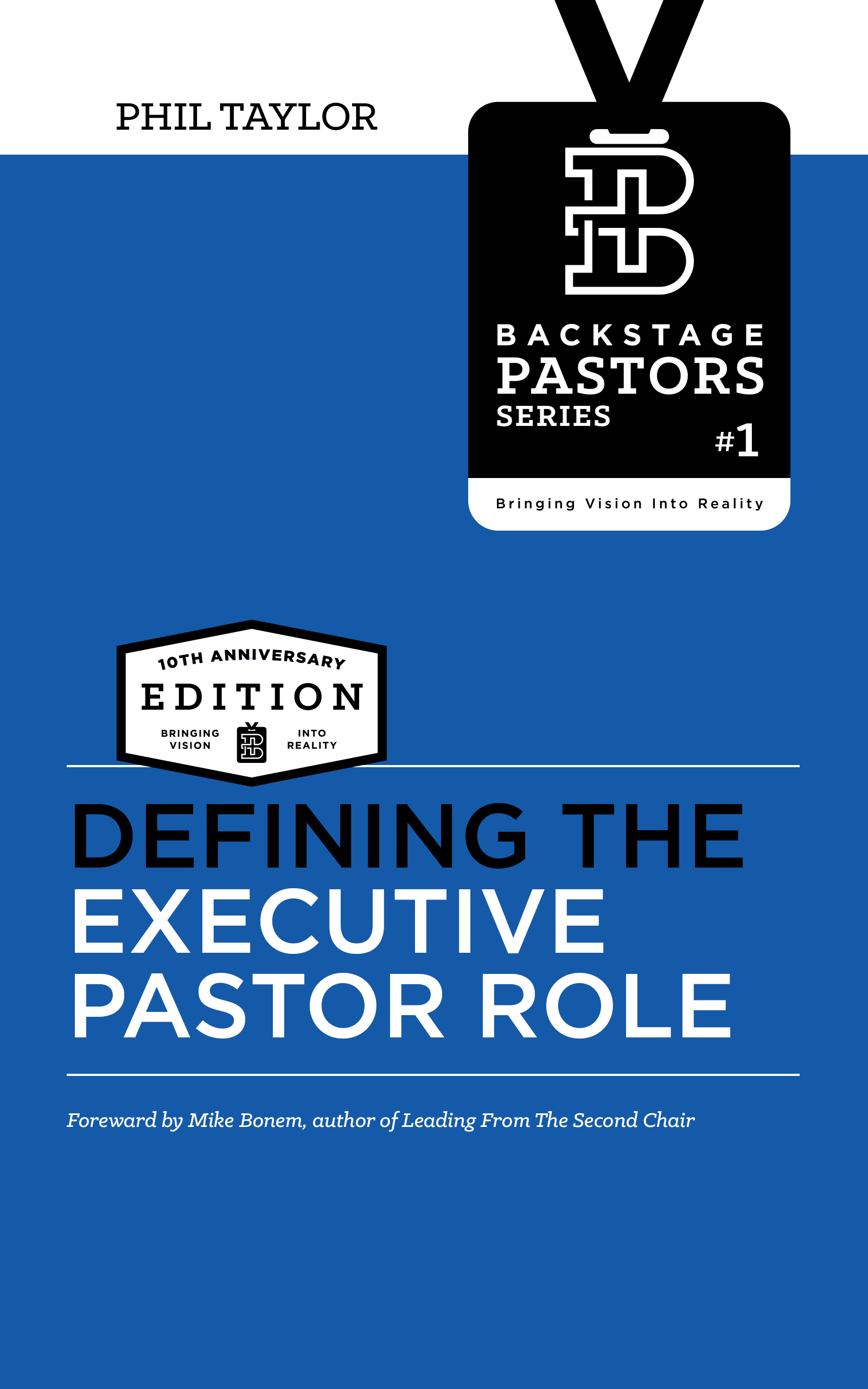
And you know, of course, I had written a, a book called Defining the Executive Pastor Role which are both, you know, the, they’re both designed for second-chair leaders. And so when I saw that you know, what your book was about, I thought, “Gosh, what, what are the chances that, like, two people from the same small private college in suburban Philadelphia could end up writing very s- similar books?”
And so I [00:06:00] bought it, and it was great. So, you know, Nathan, tell me just a little bit about how you and Dave connected and what kind of roles you were in when you wrote this book.
[00:06:12] Nathan: My, my favorite story of how David and I connected is so we’ve been Starbucks people for the whole time. Starbucks still has not been willing to give us anything for constantly mentioning that.
But- … we actually co-worked together without knowing about it for, like, months at this Starbucks. So he was a professor, and and I was just in the town that we had moved to to plant a church, and I just needed somewhere to go to work early in the mornings. And so he worked, and that was his Starbucks, which I didn’t know, and I sat near him adjacently in that same Starbucks.
We worked together for months without knowing each other, and then he ended up at the church that we had planted, which happened to be a Vineyard church, and then we met each other there. And then I discovered [00:07:00] later, going to that Starbucks, I was like, “Oh, hey, it’s David.” And he was like, “Yeah, I’ve been here the whole time.”
[00:07:05] Tyler: Wow. That’s great. That’s awesome. So then kinda tell me you know, most leaders don’t grow up dreaming about being second, and we’re wired to aim for first. I mean, you know, even in conversation, I’ve been in a second chair role, and even sometimes with friends or family, they wonder, “You ever gonna, like, step into that first chair ro-,” You know, people just wonder, are you, are you, are you aspiring for that, all of that?
And so when somebody realizes that their calling might actually be the second chair, that can feel really confusing. You’ve got these external things. You’ve got just the American dream of being you know, number one, and, and your book reframes that entirely. So just walk me through, like, where, where did that come from?
What, why, why did you feel the need to step in and kind of, speak into this issue that sometimes can be really stressful and frustrating for people?
[00:07:56] Nathan: I’ll say one thing, and then I actually wanna hand it over to Dave to unpack, [00:08:00] like, some of the turning around this, right? Because he was so instrumental.
We… He and I had so many conversations, really. It was like a, a he and I figuring out the turning of this thing because where we started it and where it ended were not the same book.
[00:08:17] Tyler: Oh, interesting.
[00:08:17] Nathan: So I, I originally started talking to Dave because I was like, “Hey, I wanna write this book about how to be the best second in command,” like what you’re saying so many people were saying.
You… “Are you gonna be first in command eventually?” And I’d, I had been first in command in a couple of different roles or, or started my own little companies or whatever, and I was like, “This is not the thing that I have energy for, what brings me joy. I really love living in this other thing that I keep seeing me to be drawn like gravity towards.”
And I was like, “I wanna get really good at that job.” And so Scott Galloway who you might be familiar with, like, he said in one of his books, like, the best way to learn about something is to [00:09:00] write a book about it. And so I just, like, took that advice, and I was like, “Okay, I’m gonna try to write a book about this thing.”
And David was the smartest person I knew and still know. And so I was like, “Hey, really, really smart, educated guy, would you be willing to go along with me on this journey of doing this deep research and writing and understanding?” And so that… It really started with an impetus of how do I become incredible at b- how do I become the best second in command, which is funny.
But Dave, can you unpack sort of like the journey we went on of that’s how it started but then not how it ended up?
[00:09:38] Dave: It’s it’s so funny. I think this is a… It speaks to the heart of the, the leadership dynamic that we often get into as seconds with firsts. We always joke that Nathan, if you read the book, is has a lot of vision, but he’s not a visionary.
So that puts some limits, and I had to be a second to his first on this book. So it’s pretty interesting. One of the things that I sort of [00:10:00] think about is like we just kept in our careers respectively even though our fields were wildly different, Mason was in marketing, I was in higher ed, that, you know, we just kept kind of bumping into this thing in the middle of a dark room, and we’re like, “What is that thing?”
We wanna kind of like get our hands on it, like illuminate it somehow. And especially me, I think while we both had had several different types of skill-based careers at that point in our lives, but there was this kind of through line where no matter where we sat, we were asking the same questions, being annoyed by the same things harnessing the same energy ticking off the same people.
And it was like, okay, there’s something here that transcends like the skill-based economy that we were raised in and just finding the right job description. This is kind of who we are. It’s more at a level of an identity. And of course, we had seen and been influenced by things like EOS and Traction and, you know, [00:11:00] there was this kind of like nascent idea in the world that there was a second type leader that was really necessary.
But it was more about defining roles and s- and sort of allocating like dynamics of leadership and, and flows. And we’re like, “That’s great, but this is also who I am.” You could put me, you know, shining shoes, or you could put me in a CEO suite, and I would still be the same person. It’s a set of sensibilities and a way of seeing the world, set of pain points, set of gifts, set of weaknesses, and we kind of just came to that.
I study identity theory through the lens of social psychology. It’s one of the areas of research interest and human personhood which sounds like an oblique fit with the leadership world, but Mason and I just sort of like realized our overlap too. So it was kind of a microcosm of our friendship ’cause we are very different in some ways, but also jam on a lot of the same stuff.
So we were like, this is more than just [00:12:00] figuring out how to sort of map the terrain of responsibilities and things certain people are good at, but it’s more a way of seeing, a way of being, a way of getting energy, a way of spending energy, and a way of galvanizing or feeling on the outside as well.
[00:12:15] Phil: Hmm.
Hmm. Yeah, I, I love that, I love that idea that the second role, second chair role is for many of us somewhat of an identity issue. In, in a positive way, I think that you just kind of realize, “Hey, this is, this is who I am. This is how I’m wired. I’m okay with the fact that it’s different than, than other people.”
And you know, I, I think that’s, that’s a, a really great discovery that, you know, you as somebody who’s spent a lot of time as a, a therapist would, would have a keener understanding of, of that than probably some of us that are in the the XP role. One of the things that I found fascinating as I read your book, you had not heard of my book [00:13:00] when you wrote your book, even though we both wrote books for second chair leaders.
And yet when I picked up your book you know, I, I’m reading it going, “Did, did these guys, like, inadvertently copy me?” Like, like, “Did they read my book and forget about it? What, what happened here?” And, and I think you know, I think really what it boils down to is that there’s some, there’s some truths out there in kind of human nature around this idea of first chair leaders and second chair leaders, and then even some subsets within first and second chair leaders that were just sort of there to be discovered.
And so I just think that’s actually really fascinating how we ended up, like, discovering some of the same ideas independently from each other. D- what are your thoughts on that? Talk about that.
[00:13:54] Nathan: One, yes. I think I remember the text after I found your book. I remember the text to Dave [00:14:00] that was basically like, “This book…”
I, and I assumed there was no connection. Like, I had no idea at the time.
[00:14:05] Phil: Right.
[00:14:06] Nathan: And I was letting him know, like, “Hey, this guy wrote a book, and it feels like he literally copy and pasted from our drafts. Like, what’s going on?” Like- In the past … how do we get in touch with him? How do we unpack this with him?
Like, what i- what’s going on?” And
[00:14:19] Phil: it re- But mine
[00:14:20] Nathan: had
[00:14:20] Phil: been written 10 years earlier, so that’s what’s funny, right?
[00:14:22] Nathan: Yes. Right. Exactly. I was like, “This can’t be happening,” right? And it was also wild because I think for both you and us, this book by these guys Nate Bennett and, Yeah,
[00:14:35] Phil: yeah …
[00:14:35] Nathan: or I might be butchering their names.
Nate and Miles. Riding Shotgun? … they wrote this book. Yeah, Riding Shotgun. Yeah, it’s a great one. And their effective result- was we have no idea, right? And so, like, you referenced them, we referenced them, and so it seems like the source material that we were both utilizing was- Yeah … there’s no source material, and somehow we both, like you’re saying, found this reality in the world at the same time, like Dave mentioned [00:15:00] earlier, sort of like bumping into this thing in the middle of the room.
But something that was really interesting in that book, the same way that w- with ours, is that in navigating, again, like the professional reality of this, it seemed like we both slammed into the reality of there is a personhood h- there’s, like, an ident- there’s a kind of human being. I mean, and, and we all believe in the room, right?
Like, God built us, and I’m like, well, a, an intelligent architect does a lot of s- things similarly. And so it seemed like we were running into this idea of, hey, we were built in a particular way, and when God moved in the world, he went, “I’m gonna make some people like this.”
[00:15:45] Phil: Yeah, I think, you know what, what, I don’t know if you guys have experienced this, but I’ll get emails from pastors a- and it’ll, it’ll say something like, “You know, gosh, I found your book, and I started reading it, and I couldn’t put it down.
I read it in [00:16:00] three hours or whatever.” And then they’ll say, “I feel like you are reading, like, my journal.” You know? “I feel like you are reading, you know, my thoughts and my prayer life as I’m trying to figure out, you know, whatever. I’m a lead pastor and I wanna s- it’s not the right fit for me,” or, “I’m, you know, a discipleship pastor or youth pastor, but I feel like I’m supposed to be in…
And then I read your book, and I was like, ‘Oh my gosh, this is me.'” Have you guys gotten those kind of emails?
[00:16:27] Dave: Oh, 100%, and just that from an identities perspective too, it, it, you know, sometimes people are a little too flowery with their praise. Like, “Oh, your book changed my life,” and I don’t know that we did any of that.
Maybe yours did, Phil. Your, you’re more life-changing than, than, than me especially. Yeah. But that idea of finding a bunch of things that felt like a junk drawer that you had, attributes that you had, and finding out that there’s congruency and coherency, which leads the case for value, I think that has been so helpful, and I’m, I’m [00:17:00] guessing that’s some of what you hear too, Phil, ’cause we’ve heard that a lot where it’s like, oh, I, I recognize myself.
I’m coherent. I’m whole. And along that path, because I’m congruent and coherent, I can have value as well. I can say I’m a thing, and I can, like, see myself and then sell myself that way.
[00:17:17] Nathan: The other thing that we both bumped into interestingly, and something that sort of actually validated us is that Dave and I interestingly, seemed to be the thing that you talk about in your book, and we had devised this theory because we were so similar and yet so different.
[00:17:36] Tyler: Hmm.
[00:17:37] Nathan: And we were like, how do we create this division between the two realities of us having this similar core but sort of these different edges, right? It’s like we shared 90% overlap, but then it, we had these really stark edges that we showed- Hmm … up slightly differently, right? And so we started calling them twos and two ics.
It has nothing to do with like positional or authority or anything. We just needed a [00:18:00] moniker to like, to differentiate, right? And you actually call them like XP, like big XP and then little X big P, right? Like, can you- … unpack that just a little bit? ‘Cause I think you say almost exactly the same stuff about who you are as a human as us when we’re creating that differentiation.
[00:18:22] Phil: Yeah. Yeah. In, in my book I talk about the capital E, lowercase P executive pastor, so kind of the more business oriented of the XPs, and then the lowercase E, capital P executive pastor, the, the XP who is a little more you know, pastorally oriented and you know, even how they interact when they work together as a lot of churches will end up having multiple executive pastors and you know, on a org chart they might be lateral, but in reality it ends up [00:19:00] looking and feeling, you know, a little bit a little bit differently.
Yeah. Y- so and again, you guys called it the two and two IC, so I’ll throw it back to you then. Unpack what you mean by two and two IC.
[00:19:11] Nathan: I’ll start, Dave, ’cause I can speak for half of it. Part of the reason that we were able to distinguish it, again, is ’cause it felt so strongly like Dave and I were both resonating intensely at the core of something, and then also really bright edges.
And so when I say, when we say two IC, we really mean this human who tends to be a little more like, like all… We call them seconds, right? Everyone who falls under this umbrella. Every kind of person who is like this tends to be both people and systems. The most important thing is like moving in alignment together forward, right?
Consistently. And two ics tend to do that a little more systems minded, and it seems like twos in our vernacular [00:20:00] tend to do that a little more people minded. It’s not that both don’t have both. The way I’ve started describing it is like you just lead with either your right foot or your left foot. You’re like you’re walking forward, but you just tend to start with one foot or the other.
And a story that I’ve told a few times now Is like if you find someone who trips over a curb, like you watch them trip over this curb, a 2IC will look at the situation, and then they will run off to City Hall to try to solve the problem systemically with the curb. Whereas a two will go, “I definitely know that there’s a systemic problem, and I need to take care of this person.”
And so that’s my understanding, and I feel like I land on the 2IC side very, I mean, pretty starkly. And so Dave, let me hand it to you to see what you would unpack, I think, ’cause you find yourself more on the two side.
[00:20:52] Dave: Yeah for sure. And a lot of this, I just as a parenthetical, I basically just did this [00:21:00] book at first ’cause I was friends with Nathan, and I’m like, “He’s a smart guy, and he’ll have enough gas and energy for us to, like, get through the project.”
And I was like, when the 2IC and two thing started to sort of differentiate and develop, it’s like, “Oh, this is me. I am this thing.” So it was a very meta experience to be like, we’re not writing this at any distance of remove from our subject matter. Like, this is like, hey so the thing we- we’ve sort of resisted, had to try to resist is, like, overgeneralizing.
Like all twos ICs think like Nathan, all twos think like Dave. But in terms of differentiation, I think the sort of order of emphasis, the overlap has a lot to do with systems, processes, how far we see down a process, and the inevitabilities and risks that come with things, that come with vision and places things can get caught.
Even understanding a first as well, and knowing where they will get caught in the [00:22:00] process and where they will stop giving resource and energy to something, ’cause that happens. Hmm … I work with a strong first now I call him the PT Barnum of pickleball. This is funny. He’s a pickleball guy, and he just wants to create, you know, a universe.
And- Hmm … nothing will get in his way except his lack of attention to detail. So, We, you know, and Nathan was like, he started in his work, like just in life being like, “I have a human problem. Like I have a systems problem, and I know all that, but I gotta get the humans on side with the system. Dave, help me out.”
And I would be like, “Nathan, I have a systems problem, but the people, the relationships are really tough around this.” And he would be like, “No. Like, you know, just-” Just force it through. You have the, you have the wherewithal and the chutzpah to do this. Just force it through. Here’s how you need to think about it from a systems perspective [00:23:00] and think long term.
So the overlap really is the system stuff. 2s are much more likely to lead a smaller team. 2ICs will lead a team of people in charge of departments more. They like that report ups, not so much the day to day. Nathan, if you’re, if you’re thinking I’m wrong, you can, you can make a very dour face or something here.
And 2s tend to like coaching m- more than 2ICs do. The coaching process, the investment in people. So again, neither bad, but that’s probably the differentiator where’s that, where there’s that clear difference, and that’s usually an energy draw and creation, so.
[00:23:42] Nathan: You’re finding nuance in exactly the same ways that I would find nuance, so yes, we’re aligned.
[00:23:48] Tyler: Perfect. So tell me, who is this book really for? Like, is it for people who are like, maybe they’re not first yet, but they want to be, and, and you’re, you’re trying to help them, like settle in the role? Or is it more for, as [00:24:00] you kind of talked about, those people who, like, just are really content and feel like they’ve arrived at the second chair, and, and it’s kind of helping them discover how to be more effective and more content with where they’re at?
[00:24:12] Nathan: My take on this is yes. Let me hand it to Dave, and then I want to pull apart… I want to come back, and I want to pull apart one of the things that we’ve sort of found since then and a, sort of like a myth to tear apart. But Dave, what were you gonna say? Sure.
[00:24:23] Dave: Yeah, well, one of the things that the points of empathy that I have is I’m a career switcher, which I think a lot of seconds can be.
Because we are kind of a Swiss Army knife in terms of skill, we, we will, because of our own pain and discomfort, like I, I realized back when I was doing my doctorate, I worked for a startup, and I ran a research lab for them, but they were like, “You ask so many questions.” And I apologized for that for a while, but I’m like, “I am a context monster.
I need so much context.” And they realized that, oh, when Dave asks [00:25:00] questions, he asks good ones, and we learn stuff along the way, us being forced to answer things and not just go fast, fast, fast- Mm … in this organization was helpful. But as a career switcher I think a lot of people are in this boat where they’re like, “I don’t know what my resume says and does.”
So when we think about who this book is for, galvanizing some sort of identity that doesn’t necessarily make you write automatically a killer resume that meets every jot and tittle of a job description. But people who can say, “How is it that I’ve been successful And how is it that I’ve been thrust into leadership?
‘Cause we’re often thrust into leadership even typically the non-glamorous kind, and we’re all right with that. A lot of that’s because we flinch first. When there’s not a system, it drives us crazy, so we create one. Mm. And especially 2ICs with their confidence, 2s with their winsomeness, we can kinda get people on side.
‘Cause if you’ve ever worked in corporate settings, people are [00:26:00] like, “I don’t know. Yeah, if you’ve got a better idea, just do it. Like, I’ll complain about it later- … but just do it.” We all know this to be true. It’s like, So I think to me, initially, that’s who the book is for. But you said firsts, like, we want…
We covet firsts reading this book. We covet it so much so they can hire intelligently. Hmm … that is something that I think is so important. I think that reading Phil’s book or our book would help somebody as a first be… just not hit their head in the hiring process and churn through people who they like and are grooming to be a first, and they don’t know why they can’t be a second.
[00:26:42] Nathan: I’m gonna step in and tear apart one of those myths that I talked about, if you don’t mind. I’m gonna- Go for it. I’m just stealing space. Go for it. And so if you can… If you’re on video, you can see that I have, like, a, a baseball cap. And now it’s awesome because it has our logo on it, and my wife made it for me.
So it’s amazing. And also, it is my [00:27:00] hat, and it’s even branded for this thing, but crucially, I can hang the hat back up and remove it, so it is not part of my body. Hmm. It’s not me. It’s not who I am. Like, I could lose that hat forever, and I would still be here, and I put the hat away just now, and I’m still talking.
I’m still sitting in this chair. So apparently, while the hat can help shape or help inform or help me navigate a world or help me display some things about myself to other people, it does not define who I am, right? If, once I take the hat away, who am I? I am still me. I, I carry my body with me everywhere.
And so one of the fundamental, like, sort of myths that we tear apart in both in the book How to be Second, but then also in our work ever since, is this idea of, like, you and your role. So we say, we say things like COO or general manager or the second chair leader or the executive pastor, and [00:28:00] all of these things are roles.
And also, you know, like, competence, you can be wildly competent at an incredible amount of things and not necessarily have energy or natural, let’s call it talent, or let’s even call it desire in those things. But you can still be wildly competent. So could you do a second-in-command type role and be a natural, insane visionary?
And the answer is obviously tons and tons of them do it. And the flip side, could you be a natural sort of person in this way that we all seem to be navigating, and also be first in command and be competent in that role? Could you wear that hat and, and be capable of it? Yes, obviously, by definition, we are sitting here, right?
And so, like, if those two things can be true, then what also must be true is we are discussing an identity, not a role. We are drawn like gravity, [00:29:00] our bodies are drawn like gravity to these kinds of roles. We cannot help it. But it does not mean that is, like, your force-fed destination, and if you’re not doing that role, you are a broken person, or you’re incompetent at those things.
And so that’s a myth I just wanna tear apart of, like, we are wholly talking about identity. You could be a barista, or an XP, or a COO, or a CEO, or a stay-at-home dad. Like, you carry your body with you everywhere. If you are this thing we label a second, you’re a second. That’s who you are. And then you can swap jackets in and out and hats and whatever like that.
But that’s just one of the key myths that we really-
[00:29:45] Dave: Mm …
[00:29:45] Nathan: tear apart, both in the book and otherwise.
[00:29:48] Phil: That’s great. I, I love that. That’s a great discussion. You know, as I read through your book, one of the… I just wanna call out one thing that sort of stuck out to me that I, I really appreciated.
You, you talked [00:30:00] about, I think it was in chapter nine, you guys had a really fascinating discussion about the idea that people in this second chair role have a tendency towards imposter syndrome. And that was really interesting as you guys unpacked it, ’cause I was like, “Yeah, that’s, that’s totally true.”
One of you choose to talk about imposter syndrome in your chapter nine. All right, Nathan’s pointing to David. Well,
[00:30:27] Dave: I, I, I didn’t raise my virtual hand as I was instructed to do. I raised my, my actual hand. I’m s- going super analog here. One of the things that really, One of the most powerful concepts, I think, from our book, at least it has been for me, is we talk about knowing what 10 is.
Yeah. So-
[00:30:45] Phil: What does that mean?
[00:30:47] Dave: So, so this is interesting. A lot of times you… It’s about having context and understanding The global spectrum of whatever attribute you’re looking at. It often is leadership [00:31:00] in an organization. So, or even something that’s a skill, like maybe you hire a graphic designer.
Steven, if you’re listening, it’s not you. I work with a graphic designer n- named Steven. This is not some sort of passive shot. But they think they’re the best designer since sliced bread, and you’re like, you’re like, “Yeah, they’re best thing,” like, and you’re like, “No. As a 2nd, I know the world of design.
Even if I can’t do it, I know you’re probably a 5 out of 10.” And often in organizations, 2nds end up being the highest number person on their team at a certain skill, but they know that in reality they are a 6 out of a possible 10, and that 10 terrifies them, and the gap between wherever they are, even if they’re at an 8, that gap between 8 and 10 looks like 1,000 miles.
It’s like, “I can’t get there.” So it’s that [00:32:00] ability to sort of like, It’s, it’s a humility. It’s sort of overkill. It’s a little bit self-abasing as well, where it’s like you’re getting maybe kudos in your organization for, you know, doing a project, project management, leading, finance. Because we’re Swiss Army knives, we might be the highest person there in terms of our rank, but we know we’re a 6.
We know we’re a 5.
[00:32:23] Tyler: Mm.
[00:32:24] Dave: And that delta between 5 and 10, knowing what 10 is, drives us nuts and makes us feel like an imposter unless we’re a 10, and we would never think we’re
[00:32:34] Phil: a 10. Everyone, everyone around us sees us as being so good at what- … we do, and yet, and yet we know the areas where it could have been better, where things could have- Mm
been a little bit better if we’d worked. Yeah, I love that idea of like-
[00:32:49] Dave: Mm …
[00:32:49] Phil: man, I just, I know what 10 looks like, and and, and right now I’m functioning at a 7 and I’d love to get to 10, but time doesn’t allow, or [00:33:00] you know, skill set doesn’t allow, or education doesn’t allow, money doesn’t allow, whatever it might be, right?
Yeah, totally. That’s good. It’s good.
[00:33:07] Tyler: So the book was released in 2023, and, you know, given everything the world has gone through, sometimes I feel like that seems like 100 years ago. And so as you guys think about this book and what you added to it and all of that, I’m sure the moment you got the box in the mail that they were published, you probably had, like, things that you wished were slightly different or that kind of thing.
So as you look back now, is there anything that you would expound upon, say differently, or kind of emphasize more strongly?
[00:33:36] Nathan: Dave, I’m gonna hand this one to you ’cause I, I mean, I could answer a million. I, I dig into this deeply all the time, and so let me ask you first
[00:33:44] Dave: So this is, this is interesting ’cause you’ll see Nathan has been much more boots to the ground with the business side of how to be second and working with a lot of seconds.
I do some coaching I maintain, you know, coaching clients, but Nathan really is sort [00:34:00] of like the linchpin that holds this together, so I will be curious to hear from him, too. I think we both probably see different things in what we’d like to add to the book. I don’t know if you can do How to Be Second, version two.
It might get be too many twos, it gets confusing, so- So I don’t know. It’d be two-two. How to be, how to be s- how to be third doesn’t really work either, so. But one of the things was it, I think it’s very clear from the book that this was sort of a a flare. We were shooting up a flare to sort of say, like, for, we had enough proof of concept, but we’re like, “Hey, are we alone?” Like, “Is somebody gonna come join us? Is somebody with us in this?” And I think that is a charm of the book, but I think that we were kind of searching for our edges as well in terms of definition and mobilization. In terms of actually mobilizing seconds toward a career search, toward owning value I think we were sort [00:35:00] of really in our infancy with that, which- Mm
developmentally makes sense. But because as I’ve tried to use this, like, I’m one of the authors, and I was like, “Okay, but now what do I do?” I, like, I understand who I am. I can look in the mirror and be like, “Doggonit, like, you’re, you’re special. You’re a second. You’re… More than that, you’re a two.” “You’re a, you’re a two.”
And it’s like, “Well, great. How do I move forward from there?” And- Sure … really also, we’ve, we’ve talked a lot about, you know, really wanting to expand and expound about outreach to firsts, really almost bearing that as a, a mark of mission, where it’s like we love firsts. Seconds tend to have a sort of an antipathy toward them, and if you’re a two IC, you tend to get fired by them every once in a while ’cause you butt heads.
But two’s just quick, ’cause they don’t get anything done. But yeah, that, like, the, that’s the, the part where I really wish we could expand and drill into, ’cause I think it has practical value. So how to market [00:36:00] yourself, how to really mobilize your secondness, and then for firsts, like, how to really hire well.
So Nathan’s really led the charge on that, and I’ll let him talk a little bit about matchmaking and how to hire well for a first of a second.
[00:36:16] Nathan: Yeah. There are a couple of things, like, I call them the, the myths that we tear apart. And so the first one I’ve already covered, the most im- and it’s the most important one if I don’t ever get a chance to talk about more, then it’s just, hey, we…
This is an identity Not your job. Your jobs are indicators pointing back at the way that you tend to move your body through the world, right? And so you know this, like natural, let’s call them visionaries, tend to visionary their way into first in command roles again and again and again on accident, right?
Like, that just it’s like they can’t help it. People are just like, “Oh, you seem to be a purple unicorn, and we have an opening for a purple unicorn.” And most of the time, a person doesn’t have an [00:37:00] opening for a visionary. The visionary just starts a thing, and people are like, “Oh, neat.” Like, the fastest way to the CEO job is to go, “I am one.”
That’s it. Like, leave the whole system, don’t do any work, just go straight out the outside. And so, like, clearly there are these kinds of humans in the world that are not like us, and the, the s- the difference is really helpful. So one of the thing… The most important thing to tear apart is that, and we’ve already done that.
The second most important thing, I think, that we don’t have in the book that I would love to add and we’ve discovered since then is really like what Dave said, like more of, okay, so, so what do I do? How can I… I have found myself and I have found sanity, and that’s wonderful. So now that I’ve done that, I don’t need to redraw the shape of who I am anymore for every new person that I meet, which is something that I had done for decades prior to this.
Hmm. But [00:38:00] now, how do I actually refine with clarity who I am and how that matters to other people?
[00:38:09] Dave: Hmm.
[00:38:09] Nathan: And that is the work that, like, we’re actively doing within the community of how to be second, of both internally for ourselves doing that self-worth and at the same time now going out and teaching other first in command leaders, first chair leader, whatever, that, like, “Hey, these people out there exist.
You, you’re Batman. You think you want a Robin. You don’t. You want an Alfred.”
You probably got a Robin ’cause they think and look like you, but they will eventually split off from you and go and start their own thing. They’re just like you. That’s the problem. Like… And so that is the key distinction of, like, finding these ways to communicate to people who [00:39:00] typically are in power somehow in decision-making authority- Hmm
that like, “Hey, if you want to actually see that thing come to life, we have all of the competence born up in this kind of human being. We just don’t generally have the energy to do those things and sustain the stuff that you do. When we go together, it’s shocking how effective we are.” And I know, like, you guys both have plenty of experience in that.
And so I would say That’s the thing since then that we’ve pushed so much into, but we weren’t able to get it, like to Dave’s point, at the time. We were sort of like, “Is anybody else out there?”
[00:39:39] Phil: That’s great. That’s great. Well, guys, this has been a, a fascinating conversation. It’s always fun to be able to just bring another resource to the executive pastor community, to the second chair community within the non-profit world.
And, you know, as, as we all know on this podcast there are just not that many books [00:40:00] written for people in that second chair role. And so, I would encourage anyone listening or watching to pick up a copy of How to Be Second by Dave Hartman, Nathan Young. Give it a read. Guys as we finish up here, how do people follow up with you?
What do you wanna promote? Anything you wanna share as we finish up our time?
[00:40:20] Dave: You can find my instructional design work, so my background is in education, instructional design, facilitation. When I’m not H2B2-ing, I am working that angle, and I’m at davidhartman.net. So you can find my list of services and things there.
[00:40:37] Nathan: So you can definitely find me on LinkedIn. You can search Nathan Young and How to Be Second. I’m the only thing that comes up for that. If you wanna go to just, like, more How to Be Second stuff, you, howtobesecond.com. We did pretty well with the branding. And then Phil doesn’t know this, but we have a a weekly email that goes out, and today, the one that’s scheduled for this coming week actually [00:41:00] includes backstage pastors, because we’re talking all about multiple different places that you can go, not just How to Be Second.
And so you can sign up for our weekly email. That’s free. We also have an Am I Second assessment on our website. Those are the things that I would recommend. Go to the website. There’s plenty of resources there, but those are my favorites.
[00:41:17] Tyler: Wow. Well, thank you so much for the mention. That’s, that means a lot.
I appreciate that very much. Well, Dave, Nathan, thank you both for putting the work into this book and for taking the time to join us today. The idea that being second is a destination and not a stepping stone, man, that just resonates with me deeply, and I’m certain that many of our audience are gonna feel connected with that concept as well.
So thank you for, like, forging that path and really doing the work to have a great resource for people. I’m really grateful for the clarity and encouragement you brought to this conversation, and so thank you so much for being here.
[00:41:49] Nathan: Absolutely. It was fantastic. Thank you so much for having us.
[00:41:51] Dave: Yeah, thanks for doing what you guys do, and thanks for having us on.
[00:41:59] Phil: [00:42:00] Well, Nathan and Dave are great guys, and while the book was not specifically written with pastors or executive pastors or the church in mind, I do think it’s a valuable resource and, and just a good read for executive pastors at some point in in their journey. And so, it was fun for me to be able to catch up with one of my old college friends as well.
[00:42:21] Tyler: Oh, ab- absolutely, and a great pleasure to get to meet them and chat with them for sure. But that’s our episode for this week. You can follow me at @TylerDrewitz, that’s D-R-E-W-I-T-Z on Instagram, and follow the show @BackstagePastors. And make sure you give us a review, comment, or like wherever you get your podcasts.
[00:42:41] Phil: Yeah, you can catch me @PhilTaylorXP, and you know, speaking of, of reviews, Tyler, we are a new podcast, and it’s really helpful to know that people are finding the show and you know, finding it helpful and enjoying it. So if you’re, if you’re watching on YouTube right now I wanna [00:43:00] just ask you to click the Like button on the video, and if you feel really ambitious, you can hit the Subscribe button, and if you wanna get even crazier, you can post a comment about the video.
I don’t understand how these things work, Tyler, but apparently- Not
[00:43:16] Tyler: at all …
[00:43:17] Phil: it, it- No one does … it helps. No. But, you know, aside from it warming my heart personally it does help the nameless, faceless AI bots that go out and crawl the internet all the time decide that our show is important to people and worth recommending to others.
So-
[00:43:37] Dave: Perfect …
[00:43:38] Phil: do that. Like- Absolutely. Subscribe, comment, all, all of those things would be great. Well, the Backstage Pastors podcast is brought to you by the Church Hub. The Church Hub serves pastors, ministry leaders, and their spouses through equipping and training resources. You can check ’em out at thechurchhub.org.
Our podcast is produced by the Good [00:44:00] Podcast Company. Thanks to Chris Starrett over there running all of that for us. Our theme music was written by Seth K. And we will see you on the next show.