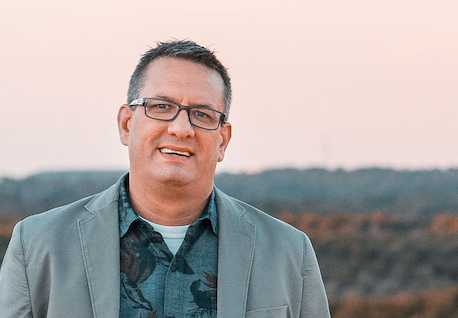
Phil and Tyler sit down with Drew Hyun, Lead Pastor of Hope Church NYC and Executive Director of Emotionally Healthy Discipleship (EHD), to explore why emotional health is foundational for effective ministry leadership. Drew shares his ministry journey—from serving under Pete Scazzero at New Life Fellowship to planting Hope Church NYC and eventually stepping into leadership of Emotionally Healthy Discipleship.
He reflects on how becoming a lead pastor revealed the importance of emotional health in ways he had never fully understood before. The conversation explores why executive pastors and highly driven leaders often struggle with emotional awareness, the relationship between emotional maturity and ministry effectiveness, and practical ways leaders can begin pursuing greater self-awareness. Drew also offers an inside look at the future of Emotionally Healthy Discipleship, including the School of Emotionally Healthy Leadership, a new Order of Emotionally Healthy Leaders, and Pete Scazzero’s upcoming book on redefining success in ministry. This episode is a thoughtful invitation for church leaders to pursue both the Great Commandment and the Great Commission, recognizing that healthy ministry begins with healthy leaders.
From Our Partners:
The Church Hub: The Church Hub serves pastors, ministry leaders, and their spouses through equipping and training resources. Learn more at https://thechurchhub.org
CHAPTERS
02:54 Drew Hyun’s ministry journey
09:12 Why emotionally healthy leadership matters
14:08 Growing in self-awareness as a leader
19:00 Practical first steps toward emotional health
23:50 Leading two organizations without burning out
35:09 The future of Emotionally Healthy Discipleship
42:00 Resources and next steps for church leaders
42:53 Wrap up – –
Editing and Support by The Good Podcast Co. Backstage Pastors™️ is a Registered Trademark
Episode 13_Drew Hyun Transcript
[00:00:00] Phil: Welcome to the Backstage Pastors podcast, brought to you by the Church Hub. I’m your host, Phil Taylor, and my co-host is Tyler Drewitz. Tyler many of, many of our episodes here at the Backstage Pastors podcast take on kind of a, a very practical tone, kind of based on who we serve in the executive pastor community.
But today we’re gonna go in a little different direction. We’ve got Drew Hyun on the show. Many of our listeners will be familiar with the work of Pete Scazzero and Emotionally Healthy Discipleship or Spirituality or Emotionally Healthy Leadership, some of those books that have been out there for a while.
Pete started Emotionally Healthy Discipleship many years ago and has recently handed that ministry on to a new leader, Drew Hyun, who’s been around there for a while. And so we’re gonna hear Drew’s [00:01:00] story a bit, and we’ll talk about why executive pastor types sometimes struggle with emotional health or emotional intelligence.
Before we get to that, completely unrelated, one quick thing before we get to the interview. This is a new podcast, Tyler, and reviews really matter to the internet- Mm … to algorithms, to executive pastors who may not have any context with who we are. And so reviews matter in that, in that space, and we really wanna ask you, if you listen to this show, if you are a regular listener, perhaps if you know Tyler and I personally we’re asking you for a personal favor to post a review on Apple or Spotify or YouTube, wherever you get your podcasts.
And I’m just gonna sweeten the deal a little bit here. Oh, yeah? I got these fun little… If you’re on the video, you can see this. I got these fun little stickers, Backstage Pastors podcast stickers, and I had these made up. [00:02:00] And I will, if you post a review- Mm … and you screenshot it, and then you email me a screenshot as proof to phil@backstagepastors.org, along with a good physical mailing address, I will physically mail you one of these awesome little stickers, Tyler.
[00:02:19] Tyler: Look at you.
That’s great …
[00:02:20] Phil: so, you know, look, we gotta bootstrap this thing. It’s new. We need some reviews out there in the world, and we’ve asked a few times. We’re not getting many. So I’m asking again, and I’m sweetening the deal here with you know, a sticker for your water bottle or, I don’t know, your computer, whatever you wanna do.
[00:02:39] Tyler: Well, that sounds like a great deal, and I agree. This is gonna be a great conversation, so let’s get to it
[00:02:54] Phil: Drew Hyun, you planted a church in New York City that has grown to three campuses. You’re [00:03:00] an author, and you are the executive director, the new executive director, at Emotionally Healthy Discipleship, which was started by Pete Scazzero. Drew, thanks so much for being on the Backstage Pastors podcast.
[00:03:11] Drew: What an honor to be here with you. Thanks so much for having me.
[00:03:14] Tyler: Now, Drew, we’re gonna talk more in a minute about the work you’re doing with Emotionally Healthy Discipleship, but I’d love to start- … with your story. I want you to- … kinda walk us through your ministry journey, how it led to this unique season where you’re balancing lead pastor responsibilities with helping a ministry that’s impacting churches all over the world.
And honestly, even before we get there, I probably should say that this isn’t just a topic I’m interested in from a distance. Our church has been deeply impacted by Emotionally Healthy Discipleship. In many ways, it transformed who we are as a church. And that journey ultimately led us to change our name from Ridgeline Church to Formation Church.
So I’d love for our listeners to hear a little bit about the person and the journey behind a ministry that’s such a significant impact on me personally.
[00:03:56] Drew: Oh, gosh. Well, I’ll, I’ll try to… [00:04:00] Thanks for that question. I’ll try to condense my response as much as possible. I grew up to Korean American immigrant parents in Los Angeles.
Went to university up in Berkeley, California. From there, t- felt a call to vocational ministry. Moved out right before 9/11 to New York City to intern- Mm … at a church called New Life Fellowship, which was the birthplace of Emotionally Healthy Discipleship. But that was actually before Pete had written anything, so I had no clue that the church that I was going to would be- become the pioneering church of this thing called Emotionally Healthy Discipleship.
Pete had hit his own crisis in leadership as well as in marriage five years prior to me joining the staff, and he had been living out these principles of Emotionally Healthy Discipleship for these five years. And I was coming in as an intern to begin learning some of the principles that he and Jerry had started to implement within the church.
So much of that was a [00:05:00] surprise to me. That first year as an intern dramatically changed my life- Mm … because of a lot of these themes that I just had never heard of. Honestly, I thought Pete was a heretic when he was first introducing me to some of these themes and inviting me to reflect on my family of origin, and talking about grief and loss so much, and introducing practices like Sabbath keeping, which is basically an intr- a, a reintroduction to the ancient paths.
Right. Right. And so a, a lot of that became really transformational for me. I ended up joining staff at the church after my intern year g- while I was still in seminary, graduated from seminary, joined staff full-time, was there for 10 years left the church after 10 years to start Hope Church, and then after I left, believe it or not, I began to appreciate Emotionally Healthy Discipleship even more.
Now, during my 10 years at New [00:06:00] Life I was part of the team who was helping writing some of the courses, the course kind of like questions and implementing it within our church. So I was deeply steeped into it, but there was something about leaving New Life and then being thrust into leadership as a church planter in my just moving from the second chair of leadership to the first chair, that it was a rude awakening for me that I, I did not expect.
And so- Mm … in my, the first few months of my church planting journey, I would routinely write an email to Pete, and the email often sounded a lot like this. First, it was like, “Pete, thank you so much. I wouldn’t be where I am without you and Jerry and your deposit into me and Tina and into our own, our own formation.”
But secondly, it was also “Pete, I’m really sorry.” I, I’m sorry in that I, I knew how important it [00:07:00] was. I just didn’t know how important it was.
[00:07:04] Tyler: Mm. Yeah.
[00:07:05] Drew: And I was dealing with the responsibility of being a church planter and wrestling with all sorts of things that I just had never wrestled with before.
The spiritual leadership involved in leading a church the anxiety around money- Mm … and and the s- and the church growth and, you know, like, all these things that become really challenging for church planters in general when it comes to our metrics of success. And so, so then as I w- grew more committed to Emotionally Healthy Discipleship, Pete and I started to work more closely together, and then we started to work with more pastors and leaders.
And then over the last few years, we’ve had a little bit of a staring contest where Pete was asking if I would consider stepping into being the president full time of Emotionally Healthy Discipleship after… Now we’ve been at it for years working with pastors and leaders, but I [00:08:00] the staring contest was because I love being a local church pastor.
I love discipling people. I love being with people. I’m a high extrovert. I love- Mm … preaching, and I love our church here in Manhattan. And so when both boards the board at Emotionally Healthy Discipleship and our elder board came to a mutual agreement that it was okay to, for, for me to step into both roles at the same time while remaining emotionally healthy Like, when we both kind of discerned that this, the way that we had framed and structured things, this would be able to work out, that’s when I was able to step into this role while kind of leading both Emotionally Healthy Discipleship and our church, Hope Church NYC.
[00:08:44] Tyler: Mm.
[00:08:44] Drew: So and it, it’s because I too, kind of like what you were saying, Tyler, I’ve been so deeply transformed by it. This is, It feels like a passion project to me, like, the something that I… has dramatically changed my life, and I just can’t- Mm … stop telling [00:09:00] people about it. So, both roles feel like that for me.
I feel incredibly grateful to just be doing what I’m doing. Like I said, I love being a local church pastor, and I love working with pastors and leaders with Emotionally Healthy Discipleship.
[00:09:12] Tyler: That’s awesome.
[00:09:14] Phil: That’s great. So True this podcast is targeted at executive pastors or second chair- leaders in the church and nonprofit space, and I, I’ve spent a lot of years in that role, 20 years in that role, and along the way, started coaching a lot of executive pastors and doing a lot of cohorts and other things. And what I have found is that there are certain things that certain recurring struggles that happen- Mm
for the person who is wired to be an XP, kind of that integrator- Mm … vision implementer person, right? That person often struggles with emotional health- Mm … emotional intelligence. Mm. Like, the very thing that makes them great at [00:10:00] getting stuff done- … can also make it hard for them to, I don’t know, see how they impact those around them with their words or- Mm
actions or even facial expressions for that matter. And so, what I find in my coaching is that I’m almost always spending a session on emotional health, and I’m usually assigning them one of Pete’s books and saying, you know, “Read this book before our call.” Mm. And so his books have really impacted me, and, and I mean, gosh, I think in, in many ways, your ministry there at Emotionally Healthy Discipleship is really responsible for this conversation even being an important part of the church le- church leadership landscape.
W- is… Do, do you guys find that to be true there at EHD?
[00:10:48] Drew: Yeah, no, absolutely. I mean, I, I think- More and more people are realizing there’s something missing when it comes [00:11:00] to not only discipleship but also church leadership and the things that we value and the way that we go about doing mission. I think what’s interesting, I think especially kind of that dynamic that you’re talking about, especially for like XP or integrator types, is oftentimes what’s hard for a lot of people who are more mission-oriented and operationally minded I, I think there’s often this divide.
One divide is like, oh, the h- there’s highly missional people who get things done, and then there’s the emotional health people who are just spending time looking at their feelings-
[00:11:40] Tyler: Right,
[00:11:40] Drew: right … and not, not getting things done, you know? And, yeah, I think what’s interesting is the scriptures, like even in the Book of Philippians, it talks about, you know, the progress and joy of the gospel, right?
There’s progress and there’s joy.
[00:11:53] Tyler: Mm.
[00:11:54] Drew: One pastor put it mission and morale. Yeah. And, and I think the [00:12:00] reality is both of those things are not mutually exclusive, but in fact, they’re both hand in hand to the mission of God. I often say it’s both the Great Commission and the Great Commandment But oftentimes, especially in highly missional cultures, the Great Commission is given more credence than the Great Commandment.
[00:12:22] Tyler: Mm.
[00:12:23] Drew: And, but it’s actually both, the Great Commandment with the Great Commission. Hmm. I actually often say that one of my most difficult leadership challenges is actually coaching church league basketball. Hmm … and the reason why I’d say that is ’cause in church league basketball, there’s usually two types of people.
Obviously, there’s many types, but, like, there’s usually two types of people. One type of person is basically like, “Man, I can’t wait to play. Let’s win this for the glory of God,” you know?
[00:12:51] Phil: Right.
[00:12:52] Drew: And they’re usually hypercompetitive, and they just- Hmm … “Hey, let’s win this for the glory of God.” And then there’s another group of people that are like, [00:13:00] “Hey, you guys are taking this way too serious.
Like, let’s just- … this is, the point of this is just to have fun.”
Right? And what ends up happening is, is as a coach, if I lean one way or the other, if I lean towards, “No, we’re just gonna win this for the glory of God,” then I end up losing the people who are like, “We’re just in this- Right … to have fun,” you know?
And then if I lean towards, “No, no, no, we’re all in this to have fun,” all the competitive, you know, people winning for the glory of God, they’re like this is not for us, you know. This is basically just recreation,” you know? And I think as a coach, and I, I see my role as a local church pastor even, like, no, as a church, we are deeply committed to mission.
So our church here, we’ve been involved with church planting and movement making and capital campaigns and all that stuff. It’s just we’re doing that while making, hopefully, the main thing the main thing, which is doing it from a healthy place- Hmm … and not from an [00:14:00] overarching imbalanced missional verve that is more driven by my wounds and trauma than it is driven- Right
by me trying to follow the voice of God.
[00:14:08] Tyler: Hmm. Yeah, I love that. That’s good. So are there any other kinda personality types, maybe leadership styles, wiring patterns that you really see seem to have a hard time developing emotional health and self-awareness? I mean, like, I’ll just own it. Phil alluded to it.
I’ll own it for the XPs who are actually listening to the XP podcast. Yep. Yes, it’s you. We represent it. But who else can- Yeah, that’s right, we do. But who else can we be, be paying attention to on our teams and that kind of thing? Is there any sort of kinda guide you can help provide with?
[00:14:42] Drew: Well, you know, sh- Yeah, I, I’m glad you talked about self-awareness because, I mean, I once read this one research study that said, like, something like 90% of people think they’re in the top 1% of self-awareness.
Th- now, that math doesn’t math, right? Like-
[00:14:59] Tyler: No. [00:15:00]
[00:15:00] Drew: But the reality is even amongst us three, we’re probably like, “Oh, yeah, each one of us, we’re probably in the top 1%.” I’m one of them.
[00:15:05] Tyler: Sure, yeah.
[00:15:06] Drew: Yeah. And I, I think the reality is… And so here’s the, here’s the really crazy part, is that, you know, here I am, I’m the president of Emotionally Healthy Discipleship.
The, the moment that I think that I’m emotionally healthy is the moment that I probably need to go confess and repent of something, you know?
[00:15:27] Tyler: That’s good.
[00:15:27] Drew: It’s kinda, it’s kind of like the Jesus adage, right? Like, if the moment you think, for those who are finding their life, that’s when you’ve lost it.
[00:15:34] Tyler: Mm.
[00:15:34] Drew: But when you lose your life, that’s when you’ve found it. And so, hopefully, my disposition would be for anyone on our staff team is, like, you know, Scott McKnight talks about how there’s two different, In encounters with Jesus, there’s two catalysts for change. One catalyst is crises that happen.
Like, hey, my, my daughter is sick, or I’m blind and I cannot see. There’s a [00:16:00] crisis or there’s a quest, someone who’s on a journey, right? Nicodemus comes and says, “How can I be born again?” And the problem is most people don’t go on the quest until they’ve hit the crisis.
[00:16:17] Tyler: Mm.
[00:16:18] Drew: And so, really- Mm … I feel like my role on our staff team and my own role for myself is number one, for me first to continually be on a quest of growing in self-awareness, in emotional health, in all these different ways.
Like, I can’t lead people where I have not been.
[00:16:39] Tyler: Mm.
[00:16:40] Drew: And then, and then to hopefully invite the others on our team, whether they’re operational staff, whether they’re pastors on staff, you know, whether they’re worship leaders, whether they’re… Is to invite everyone on our team, and elders alike, for all of us to be on a similar [00:17:00] quest of growing in self-awareness.
We talk about emotional health and contemplative spirituality. Growing in self-awareness and then growing in a slowed down spirituality so that I can be present to doing the deeper journey, as well as present in healthy relationships with- Mm … the people that I’m closest to.
[00:17:20] Phil: I love that. I love that statement about most people don’t go on the quest until they’re in the crisis.
I was thinking back to an opportunity I was given many years ago. My wife and I were invited to take part in a week-long marriage intensive. It was just- Mm … my wife and I with a couple out in Colorado Stephen Smith and his wife. You might know Stephen through some of the work you’ve done, Drew.
And you know, it, it was, like, just intense, like, every day, all day. And our marriage was not in crisis. It was preventative. It was just a, “Let’s go do this and make sure we’re doing okay.” But you know, at the time, I really did not have good… a good [00:18:00] handle on a lot of the issues around emotional health and whatnot.
And so this will just give you a little bit of a sense of where I was, Drew. I actually asked Steven one day the question… This is a guy who’s written, like, five books on soul care, right? Mm. I’ve a- I asked him the question “Hey, Steven, what do you, what do you think, what do you think is the ROI on soul care?”
[00:18:20] Tyler: Mm.
[00:18:21] Phil: Like, that, that was actually a question that went through my mind, which- Yeah … just kind of tells you where I was personally, right? Mm. And he just kind of laughed and said, “Okay, we got a long way to go, Phil.” So, but it was, it was good. But, so, you know, put yourself then, Drew in, in the mind of that kind of hard-driving, get stuff done, driven executive pastor who is listening to this thinking, “I don’t know.
I mean, I think maybe I’m emotionally healthy,” or, “I don’t… aware. I, I don’t even know what that means really. I’m not sure.” Like, where does that person even start? Like, do you point them to one of your books? [00:19:00] Is there a course on your… on Emotionally Healthy Discipleship website? Like, what, what do you think is a good s- or a few good first steps?
[00:19:09] Drew: Well, so first I’ll talk about our research, but second, I’m just thinking about just the practical next step. For… I mean, we have an assessment on our website at emotionallyhealthy.org where someone can take a self-assessment around- Right … how emotionally healthy are you. … We have… Then we have courses that we’ve created for churches, and the course, we invite people just to go through the course with a couple of trusted people for the first time.
And when I say go through the course, really do the course. Read every page in the book, go through all the questions, reflection questions, and the exercises, practice the daily office that goes along with it. And another option is we have something called the School of Emotionally Healthy Leadership that we do every fall and every spring- Mm
which is a deep dive for pastors and leaders to do the deeper journey [00:20:00] alongside a trained mentor with other pastors and leaders from around the country and around the world. Mm. And so it’s kind of a smaller cohort, but then it’s also part of a larger thing that we call the School of Emotionally Healthy Leadership.
It’s an investment around 30… I’d say at least 30 hours a semester Yeah.
[00:20:20] Phil: Okay …
[00:20:21] Drew: in your, in your own personal formation every fall and every spring. So, I mean, those are the most practical things. I think the second thing, I think, is if, hopefully there’s at least some people that are that you feel safe enough and that feel safe enough around you where they can offer honest feedback.
And- Yeah,
[00:20:42] Phil: yeah …
[00:20:43] Drew: I would actually have them give me feedback. Like, “Do you think that I’m an emotionally healthy presence?” And then if they ask, “Well, what does that mean to be an emotionally healthy pr- presence?” Then I would point them to our assessment and say, “Could you just fill this out for me?” “And you tell [00:21:00] me if this is what, you know…”
Yeah. And you know, in that assessment, it has a lot to do with the hurriedness that I live with the defensive posture that I might- Hmm … take when it comes to conflict, my capacity to listen to people, my capa- my tendency to over-spiritualize things- Hmm … instead of being able to clearly communicate, “No, this is not what I wanna do,” instead of saying, “You know, God’s just not in it,” you know?
And blaming God, using God to run from God is the language that we use. Hmm. And so, there’s a number of different kind of, kinds of themes in our assessment that we’re talking about related to it. So I think, And, and, you know, but even in the business world, I mean, to even speak to XP types who, you know, are about mission and productivity, like even studies have shown…
I mean, you’ve got authors like you know, Simon Sinek and others when he’s talking about the infinite game and the finite game, and talking about how, you know, it’s not only [00:22:00] about results at the end of the day for organizations, but how do we reach those results? And are those results, are they things that can last in the long term?
I mean, Jim Collins writes about this too in his books on Good to Great as well as How the Mighty Fall, where it’s not only… Remember that whole thing about mission, but also how morale and culture is actually often the catalyst for the most longstanding mission. Hmm. And one of the crazy thing…
I mean, I started to lean even more into emotional health when, So we started the church, then COVID hits, and then in New York City our, like, there were some more publicized churches that were going through some very, very painful things. Some more well-publicized, some less publicized, but so many churches were reaching out to us asking if we would help.
And then something dawned on me. It was like, man, it doesn’t matter how fast a church can grow Because [00:23:00] if health is not at the foundation of it, it’s just a house of cards.
[00:23:04] Tyler: Mm.
[00:23:05] Drew: Like, it can, just as quickly as something grew, it can easily fall.
[00:23:11] Tyler: Mm.
[00:23:11] Drew: And so that actually caused me to lean even more into Emotionally Healthy Discipleship, just to realize gosh, health is such an integral part of the mission.
Which is when we start to double down on working with pastors and leaders in a more significant way. So that’s where I would, you know, I would say take an assessment with safe people. You… Like, any investment, oftentimes what I say is any investment that any leader makes into their own personal formation I think pays incredible dividends for the organization as a whole, especially in pastoral ministry.
[00:23:50] Tyler: That is great. Thank you . Yeah. Just taking it all in. So you’re serving as the lead pastor of a multi-campus church while- … also helping lead a [00:24:00] ministry that impacts churches around the world. And so how are you balancing that and also you’ve got a real life, family, I assume, that kind of thing.
Yeah, yeah, yeah. And so, and then also, as someone who hosts a podcast for executive pastors, I have to ask how much of that is only possible because the leadership around you? Yes. And in particular, I’d love to hear about the role your XP, Dave Jennings, plays in making it possible for you to carry these responsibilities, and just sort of what have you learned from all of that?
I think, I think as an XP who’s been in that situation before, your lead pastor coming to you and saying “I have this opportunity for something else too,” is something I think some XPs, like, have nightmares about. So how have you kind of- I- I’d, “Yeah, another
[00:24:42] Phil: job, but I’m staying here,” right?
[00:24:44] Tyler: Right. How have you worked through that, and just how is it working?
[00:24:49] Drew: Yeah. No, that’s a great question, and one that I get fairly frequently, as you might imagine, you know? Sure. And you’re totally right. It’s basically the team around me. So once our church… [00:25:00] Our church is in a place, I hope, I mean, I, I say I hope because obviously, you know, the minute, again, like I think that we’ve arrived is the minute that I should probably…
But our team is in an amazingly healthy place right now. So our executive team consists of our th- our location pastors at the three locations Dave Jennings, who’s kind of like business and operations.
[00:25:24] Phil: Okay.
[00:25:24] Drew: And then we have a woman named Rochelle Inge, who’s kind of like a, a personal integrator to me as well.
Now so the three locations, they’re pretty much led by these location pastors, and we do live preaching at each of those locations.
[00:25:40] Tyler: Okay.
[00:25:44] Drew: They’re doing a phenomenal job. And my main role at the church is to make sure that they are spiritually hopefully flourishing and that their marriages and their families are flourishing.[00:26:00]
Mm. And so, like, my main role I see is those six people on our, on our executive team, I am deeply invested in their own personal formation, Mm … and in leading them. And believing that when they’re flourishing, the churches flourish as a result. So, so on the church end, so w- what happened before I stepped into this role with Emotionally Healthy Discipleship, I went away on sabbatical from Hope.
And so, and every sabbatical that I go on is kind of an exercise for me in dying. Sorry, I realize that most people don’t say that when it comes to sabbaticals, you know? Sure. They’re like, “Usually it’s restful and replenishing.” But it’s actually an exercise for me in dying because it’s an exercise in me learning how to be irrelevant.
[00:26:49] Phil: Mm.
[00:26:50] Drew: So last summer- That’s good … when I went away on sabbatical it was kind of like, gosh, if I were to step away from Hope, how would things function? And I do a, [00:27:00] we do a three-month sabbatical every three years.
[00:27:03] Phil: Mm.
[00:27:04] Drew: So in many ways, every three years then, my aim is how can I become more and more irrelevant to our church?
Hmm. And so last year I stepped away, and then when I came back, our church had grown. Our leaders were flourishing, which I was very excited to hear about. Mm. And then when I came back they were like, “Hey, we didn’t, we kinda didn’t need you as much,” which kinda hurt my feelings. Fair. But it was, it allowed me to come back then last fall and just basically be like, “Okay, my main goal is to be invested in your flourishing and to help wherever I can.”
Now, the church is still in a place where, like, are there areas that I still am necessary as a vision caster for the whole, and when it comes to fundraising, that’s probably, like, a big part of my role. But so on the church end, that’s… Our, like, our [00:28:00] team is wonderful. I love working with them and and that’s been a great joy.
On the EHD end, sorry if that was e-mas- almost too much information- Oh, no. That was perfect … and I’m talking so long.
[00:28:12] Tyler: No, no,
[00:28:12] Drew: you’re great. But and then with Emotionally Healthy Discipleship, so a lot of my role, which was before I stepped into the president role, a lot of my role was I was Pete’s integrator.
So I’m kind of a uni- I, I’m a little bit of a rare bird in that I’m an Enneagram 2, so I’m a helper
[00:28:30] Phil: Hmm.
[00:28:30] Drew: But I’m apostolic with a communication gift who is admin-oriented
[00:28:39] Phil: That is very rare.
[00:28:41] Drew: Yes.
[00:28:42] Phil: Incredibly rare.
[00:28:43] Drew: So as a result, like I, A lot of the initiatives, like that school I was telling you about and these cohorts that we would start, I was a person who Pete would come to, and I would help execute while he was [00:29:00] the face of it.
But because I have a communication gift, and because I’ve taught this material so often, I could easily slide into that role as well.
[00:29:09] Tyler: Mm.
[00:29:10] Drew: And so, so anyhow, so up to this point, I had already been involved in pioneering all these programs. Now what would happen is we started the school, and then we’d be able to build out a team that would then take it from me to now kind of, like operating the school and stuff.
So, and most of my role with Emotionally Healthy Discipleship was working with pastors and leaders- … not only in the school, but also in these cohorts. And our newest initiative is we’re actually starting a monastic order, an order of emotionally healthy leaders. Mm. And the order of emotionally healthy leaders all…
We are all coalescing around a common rule of life a rule of life being an intentional plan that all of us have committed to- Hmm … about how we’re gonna follow Jesus together. And so, like, all [00:30:00] of that is so part of, like the stuff that I love. Mm. Like working with pastors and leaders being in community with them, creating formational environments for them.
And so, so that’s what I was doing regardless. And then when I stepped into this this is where you’ll hear now the tension where I am right now, is like I am so drawn to that, but now stepping into this role as a president, I’m now involved with board development, fundraising, like organizational development.
So part of my discipline right now has been like going from player to now kind of general manager more, like- Sure … who’s, who’s now thinking through the organization. And and at the same time, like for me to say… And what I’ve said to Pete, and I’ve been very public about this, I’m like, “Pete, this is [00:31:00] not a true succession because I still want you around.”
Right. “And you still have your fastball. And so le- why don’t you just continue doing the things that you’re really great at, which is writing and mentoring, and I will help build the organization.” So in some ways, I’m still an integrator for him. Hmm. But he’s done a good job as well of taking a step back and- Like, the changes that need to be made organizationally, I’m so grateful that he’s been very helpful in authorizing me to move forward in some of those changes.
[00:31:37] Tyler: Awesome.
[00:31:38] Drew: Now here’s what’s interesting about the overlap between… And I don’t think it’ll be like this forever, but sorry, this is more nuts and bolts and… But like- No, this is great. No,
[00:31:46] Phil: this is great. I love
[00:31:47] Drew: hearing. I, I, I told you guys about Dave Jennings and Rachelle. They both also work with me on the Emotionally Healthy Discipleship end now on helping build out the organizational [00:32:00] side of Emotionally Healthy Discipleship.
So they’re bivocational, just like I am, working on both organizations.
[00:32:08] Tyler: Got
[00:32:08] Drew: it. So in some ways I’ve got two of my integrators on the church end also working on the, on EHD. And then in addition to that all the pastors that y- I told you that w- I’m kind of, I see as my main investment on Hope’s End, they’ve all been in the discipleship environments for pastors that we created with Emotionally Healthy Discipleship.
And now they actually volunteer to help work with other pastors and leaders as well in our Emotionally Healthy Discipleship ecosystem.
[00:32:40] Phil: Gotcha.
[00:32:41] Drew: So as a result like… And a lot of the pastors and leaders too that we’ve invested in through the years, that Pete and I have, they’re now deeply engaged as volunteers in investing in other pastors and leaders which is kind of the extraordinary thing of what’s happening right now with Emotionally [00:33:00] Healthy Discipleship.
We’ve got a lot of volunteers, and now it’s up to me to kind of build out what’s the scaffolding of an organization where we can start hiring staff where we need so that we can hopefully build and scale this in a more significant way. So the limits right now that are on me for sure is like, ugh, I, I keep having to say no to I keep having to say no to a bunch of things.
And so, like that common rule of life and then my personal rule of life both the EHD board and our church board, they get full visibility into my own life. They’re checking in with my wife and I and our marriage. So Tina and I, right now, I- we feel, we feel full of life and joy. I mean, I, I, I love both of my jobs- Okay
at Hope and Emotionally Healthy Discipleship. I do recognize that Emotionally Healthy Discipleship, we need to… In some ways, we need to build out the scaffolding of the organization a bit more. Hmm … but I’m here [00:34:00] for it, and I just have to remember to s- like, just that image of like, okay, you gotta move from p- player to like, you gotta be more the general…
It’s more about building the team now, which honestly has been a little bit sad for me because I’ve loved some of the ministry-facing stuff so much.
[00:34:18] Phil: You’re in a unique position, Drew, of being somebody who you know, at the same time, you were simultaneously the lead pastor of a church, and in many ways the executive pastor or director of of Emotionally Healthy Discipleship.
So you were kind of in the first- Yeah … and second chair together at the same time, you know. Which is a very unique role to be in, so I think that’s, it, it makes you a very, very good leader and choice to be able to take over EHD at a time when Pete is… He’s not dead, you know. He’s, he’s around.
He’s serving. He’s got a lotta, a lotta good stuff left in him. So, that makes you a very, very unique fit. So you mentioned the you mentioned the monastic [00:35:00] order. What else are you excited about for kinda the next season of Emotionally Healthy Discipleship? What are you guys working on that that you’re excited about?
[00:35:09] Drew: Yeah, I mean, that’s the biggest thing is… Well, initially the or- the arc of the organization was we provided courses for churches, for people to go through individually, and then for churches to implement in discipleship in their churches. And then we realized, gosh, even if a church offers a course though, it’s not enough, because the culture remains unchanged.
And one of the realizations was the r- A church could be running the course, but if the leaders are not living it, the culture will not change
[00:35:46] Tyler: Mm.
[00:35:47] Drew: So that’s why we started the School of Emotionally Healthy Leadership, to invest in leaders so that we can start changing the culture of churches.
[00:35:55] Tyler: Mm.
[00:35:56] Drew: But then what happened was after the school, people would ask us, “So [00:36:00] what’s next?”
And then that’s when we were like, “Oh, well, you know, go and do likewise.” And they’re like, “We need more.” So then we started these cohorts, and then after the cohorts, people would say, “What next?” And we were like, “Oh, well, go and do likewise.” And then but we realized, gosh, the, the Protestant evangelical subculture is so thick when it comes to how it measures success and what is important And the culture tends to emphasize a way of doing spirituality and quick results and surface level discipleship that we realized no matter how many things we have for pastors and leaders, if there’s not an ongoing community of accountability and support and encouragement, we fall into the [00:37:00] same cycles of a culture that measures success a certain way.
And so really, the pioneering of this order, what it came from was not only Pete… It was like, “Pete, you’re not gonna be around forever.” So more than just Drew Ryan is gonna carry on the mantle of Pete Scazzero or whatever, it was, “Pete, what is the culture of what we’re saying leaders should abide by?”
[00:37:27] Tyler: Mm.
[00:37:28] Drew: And so out of that, Pete that’s where we formed… We wrote out this rule of life, and we invited, We just… It wasn’t public. We just invited a group of 65 pastors to see if they were interested, and much to our surprise… Now, in this rule of life, it’s pretty… It, it, like, it’s a lot. It’s like, “Hey, you’re gonna go on sabbatical this many times.
You’re gonna do 20 minutes of silence every day. You’re gonna practice Lectio Divina four to five times a week.” It’s, like, very [00:38:00] spelled out. Much to our surprise, of the 65 that we emailed, 60 said they were interested.
[00:38:06] Tyler: Wow.
[00:38:08] Drew: And we were like, “Whoa, we don’t have room for 60. We’re gonna start with six.” So we just w- so we started with a group of six around this rule of life, meeting monthly, and it ended up being so transformational that we st- we…
We’re now pioneering year two, where now there’s a group of 30 that have said that they’re all interested. And so we realized that this ongoing community, which is what this order is, this Order of Emotionally Healthy Leaders, And Pete is a- has actually just written a book that’s gonna be released this fall called Emotionally Healthy Success.
Mm. And it’s, it’s got assessments in there about how do we reframe what we think of as success, not only personally, but organizationally and it’s about a new ministry scorecard for success. I, I, I th- it’s a [00:39:00] phenomenal book. I can’t wait for it to get into the hands of church leaders because it’s… And the next step for us was, hey, we’ve created this community that’s trying to reframe the ways that we think about success.
Now, what we’re saying is, hey… We’re not saying to these church leaders, “Hey, be a small church,” or, “Be a, you know, medium-sized church.” What we’re saying is, “Be who God’s called you to be, but at the heart of it should always be the Great Commandment before the Great Commission,” which is where, you know, this assessment and everything’s coming out of, and the, the order is just one simple offshoot out of it.
So now with the 30 that we’re working with, there’s still, you know, there’s probably another 60 now that are still on the wait list. Hmm. But we’ve been multiple… And our goal is not… Like, we didn’t set out to build, like, a big… We’re not like, “Oh, we’re gonna have 1,000 people as part of this order in the next five years.”
It’s really, like, for us, we’re, like, thinking, “Man, maybe from 30 we’ll go to 15 [00:40:00] next year,” because for us what matters more is the quality of what we’re producing, especially in these early years. Sure. Now this is all in addition to the stuff that we’ve already been doing, like the school continues to keep going.
What’s been awesome is all these things, schools, webinar Pete is no longer involved in any of those. And we’ve had the highest engagement that we’ve ever had. Hmm … he’s still involved in the podcast, which is great. He’s still got his fastball there. So, we’ll be thinking about all those transitions in coming years, but hopefully we’re trying to do it thoughtfully with the quality of what we’re doing being at the, at the heart of things.
Again, sorry for such a long response, but yeah.
[00:40:39] Tyler: That’s… No. We, we appreciate it very much and I’m very intrigued to continue to sort of stay up with how that’s doing. I, I love it and I’m gonna Google about it. Is there anything about it online or is it pretty closed
[00:40:51] Drew: off- I don’t think so … currently? Okay.
It’s pretty closed off currently. Got it. And we’re… So we started the order… So we’re, we’re starting… Remember how I said we, we emailed [00:41:00] 65 people?
[00:41:01] Tyler: Yeah.
[00:41:02] Drew: And they were all lead pastors.
[00:41:04] Tyler: Oh, wow.
[00:41:04] Drew: And the reason why… And people have asked, “Oh, can I be part of it if I’m a youth pastor or something?” And we, the reason why we started with lead pastors is because in our experience- Even if a church, if everyone on staff loves Emotionally Healthy Discipleship and is, is living into it, or is trying to live into it, if the lead pastor is out of control, it’s very difficult- Right
for the culture to change.
[00:41:33] Tyler: Yeah. Yeah. Totally. Period.
[00:41:34] Drew: And so that’s where w- we started to laser focus on, like, hey, where are we gonna start? We’re gonna start with lead pastors, because if we can just get to the lead pastor to start living a life of a slowed down spirituality and a discipleship that goes beneath the surface- then a church has a fighting chance to hopefully transform a culture.
[00:41:56] Tyler: It’s amazing. Well, Drew, we really [00:42:00] appreciate you taking time out of an incredibly full schedule to spend time with us today. It’s really been a gift to learn from you and to hear more of your story. As we wrap up, is there anything you’d like to point our listeners towards?
Maybe a resource, a book. You’ve mentioned some different things, something from Emotional Healthy Discipleship, or just even a next step for listeners that they need to take kind of ownership of their own, just where they’re at right now.
[00:42:23] Drew: Yeah. I I’d say check out emotionallyhealthy.org. Okay … and if you’re a church leader, I would seriously consider being part of the school every fall and every spring.
[00:42:33] Tyler: Hmm.
[00:42:33] Drew: And just to do the deeper work of discipleship for yourself.
[00:42:37] Tyler: Awesome. Well, thank you so much. We’re gonna make sure that links to those resources are in our show notes so listeners can track with them and learn more. But thank you so, so much for your time today.
[00:42:46] Drew: Thanks, Chris. Thanks.
Thanks, Tyler. Thanks, Phil. Thanks, guys. Appreciate you guys.
[00:42:53] Phil: Gosh, so good to be able to get a little bit of time with Drew and hear about the ministry, where it’s going, where it’s come from, [00:43:00] and all the good things they’ve got going on. I really wanna encourage our listeners to check out The Emotionally Healthy Leader podcast that Drew mentioned as well as one of Pete’s books or Drew’s new book that just came out, I believe, late last year.
[00:43:15] Tyler: Yeah, you know, one of the things I’ve appreciated most about emotionally healthy discipleship is its core conviction that we’re never more spiritually mature than we are emotionally mature. It’s a simple statement, but it… If you really let it sink in, it has huge implications for how we lead, disciple people, and follow Jesus ourselves.
For our church, this wasn’t just an interesting concept, it was genuinely it, it changed everything for us. The emphasis on slowing down, paying attention to what’s happening beneath the surface, and integrating practices like silence, solitude, Lectio Divina into everyday discipleship, including our worship service, has had such a profound impact on our congregation.
You know, a lot of churches do a great job of helping people learn more about God, and we found that through [00:44:00] emotionally healthy discipleship, there was a framework for helping people actually be with God and allowing Him to transform the deeper part of their lives. The journey has been so significant for us that it ultimately shaped the identity of our church and even contributed to our transition from Ridgeline Church to Formation Church.
So man, we are grateful for the resource and the training, and even more grateful for the lasting fruit seen in our own community as a result
[00:44:26] Phil: Yeah, I, that’s crazy actually that the work of Emotionally Healthy Discipleship actually influenced a name change at your church. That’s, that’s amazing. That’s a big deal.
And so again- Big deal
[00:44:38] Tyler: too. XP, there’s, there’s cost associated with a name change too- There- … so, you know-
[00:44:43] Phil: Right …
[00:44:43] Tyler: signage and everything, so we had to be committed.
[00:44:46] Phil: You’re like, “Can’t this just be a sermon series that we do?”
[00:44:49] Tyler: Yeah, yeah.
[00:44:50] Phil: We’ll, we’ll make a screen-
[00:44:51] Tyler: The digital idea is nothing.
[00:44:53] Phil: Reprinting all the signage, getting the website changed- that’s a different- Yeah … kind of a deal, right?
[00:44:57] Tyler: That’s a big commitment.
[00:44:58] Phil: It is a big commitment, [00:45:00] and that says a lot about you and Ryan’s work on that. Well, again, we wanna say thank you to Drew, and by extension Pete Scazzero for being a part of our podcast here. And I’m gonna give a quick shout-out to Dale Borgen.
Dale is on our team at Plain Joe Studios. Kind of interesting, but Pete Scazzero and Emotionally Healthy Discipleship has actually been a creative client kind of a retainer client- Mm … at Plain Joe Studios for, like, I, I think I’ve heard, like, 20 years is what I’ve been told. Oh,
[00:45:29] Tyler: wow.
[00:45:30] Phil: Yeah, it’s, they’ve been around with us forever, and Dale has been in charge of that relationship on the team at Plain Joe for most of that time, and he’s gotten super involved there at EHD you know-
[00:45:41] Tyler: Mm
[00:45:42] Phil: uh, almost a part of their team. And Dale brokered this interview for, for us with Drew, and so we’re grateful for that. We’re grateful for Emotionally Healthy Discipleship for trusting us at Plain Joe with your creative needs for so long. Well, that’s gonna close out the [00:46:00] show, Tyler. You can follow me, listeners, you can follow me @philtaylorxp on the socials, and you can follow the show @backstagepastors there as well.
[00:46:10] Tyler: You can catch me at @tylerdrewitz, that’s D-R-E-W-I-T-Z. The Backstage Pastors podcast is brought to you by the Church Hub. The Church Hub serves pastors, ministry leaders, and their spouses through training, equipping, and practical resources. You can learn, learn more at thechurchhub.org. Our podcast is produced by the Good Podcast Company, and our theme music was written by Seth K.
Thanks for listening, and we’ll see you on the next show.