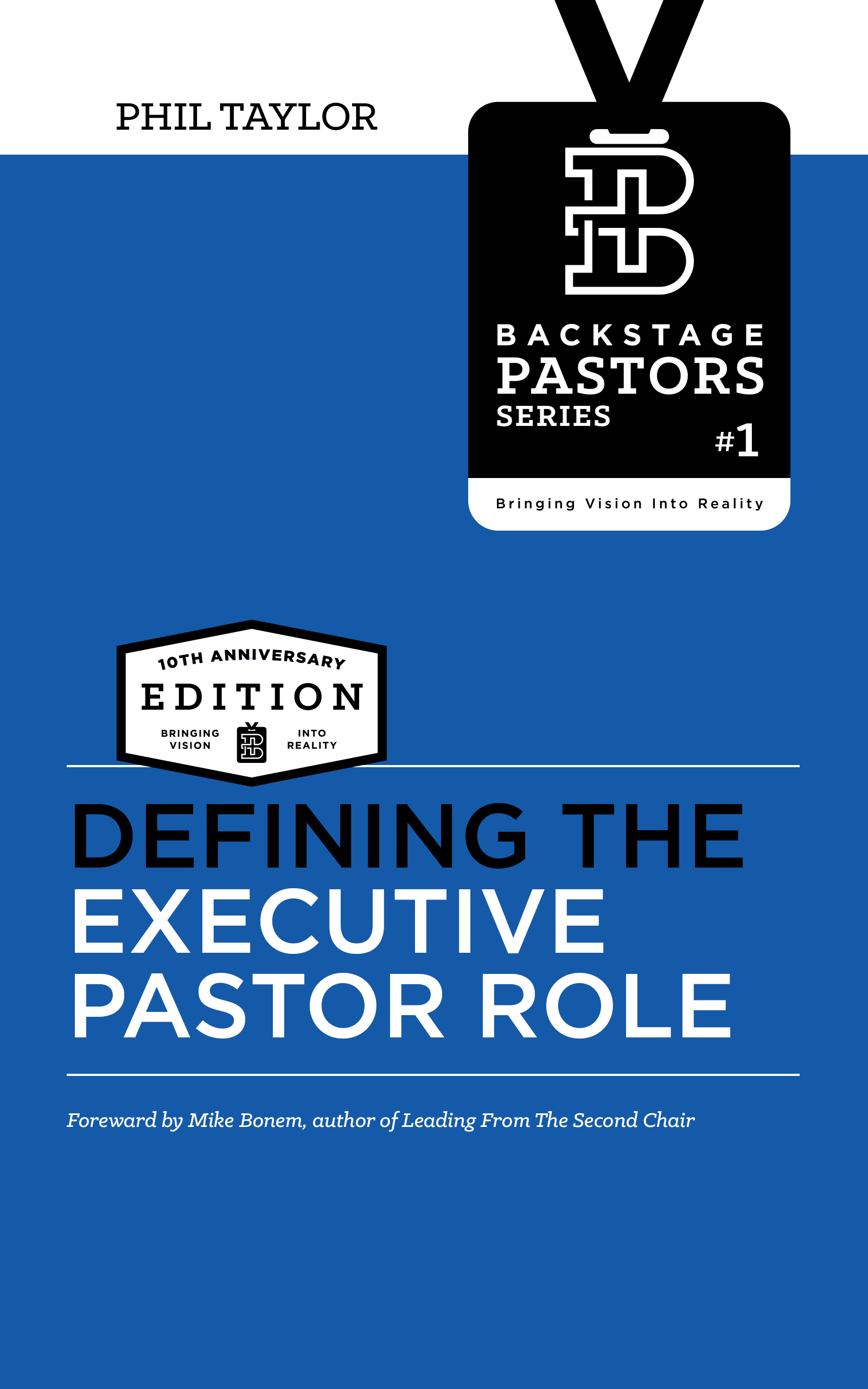
In this episode, Phil and Tyler sit down with Kyle Nabors, a seasoned executive leader who has served in both large churches and global nonprofits. Kyle shares insights from decades of experience, including time at Kensington Church (a 10,000+ attendee church) and Mercy Ships, and reflects on leadership, culture, trust, and the nuanced role of the executive pastor.
One of the central themes is Kyle’s well-known metaphor: the church as a well-watered garden versus a well-oiled machine. While certain systems require precision and predictability (finances, child safety, compliance), much of ministry leadership requires organic flexibility, attentiveness, and faith. Structure must serve mission—not the other way around.
Throughout the conversation, you’ll be reminded that effective executive leadership isn’t about control—it’s about calibration. It’s about knowing the “blood type” of the organization, understanding the personality of the lead pastor, and helping clarify direction while cultivating culture.
CHAPTERS
00:00 – Introduction to Kyle Nabors
04:00 – Kyle’s Leadership Journey: Military, Business, Nonprofit & Church
09:00 – The Lunch That Sparked a Book
11:53 – Structure Must Serve the Mission
15:00 – Trust: The Currency of the Executive Pastor
21:19 – Backstage Leadership at Kensington Church
25:00 – Diagnosing Before Prescribing
31:54 – Thriving, Authenticity & Spiritual Health
36:00 – Navigating Church vs. Nonprofit Culture
43:48 – Return on Investment, Direction & Stewardship
– –
Editing and Support by The Good Podcast Co.
BP_Episode03_Kyle Nabors
[00:00:00] Phil: Hello and welcome to the Backstage Pastors Podcast. These are hopefully helpful conversations for executive pastors and second share leaders in the church and nonprofit world. I’m your host, Phil Taylor, and my co-host, as always is Tyler Ditz. Tyler, it’s always good day when we get to hang out a little bit online.
[00:00:32] Tyler: Thanks, man. I definitely feel the same way. These conversations are always such a highlight of my week. I love, anytime we’re together, we always end up talking a little bit of shop and I love doing that and hopefully, uh, I think what I love about this different than our regular conversations is these actually have the ability to hopefully be helpful to anyone out there who’s doing this.
Work’s the goal every single, right? I mean, otherwise I have some work to do. So
[00:00:56] Phil: we’ve all got things
[00:00:57] Tyler: to do. Yeah. Exactly. So, uh, [00:01:00] in this Backstage Pastors podcast we’re really focused on equipping executive pastors and second chair leaders no matter what title they might carry, uh, whether they’re in the church world or the nonprofit world, or any kind of other sort of situation as well, where they’re in that second leader role.
And so today’s guest has spent meaningful time in both of those, uh, spaces. Kyle Nabors has played a big role in you writing the defining the executive pastor role, correct.
[00:01:25] Phil: Yeah, that’s right. Uh, Kyle encouraged me very early on to start writing. He just did a, we were just having lunch and he just commented that he felt like the way that I was talking about the XP role, uh, was, uh, just different than what he had heard before.
[00:01:42] Tyler: True.
[00:01:43] Phil: And he saw a benefit in me getting my ideas to a wider audience. And so at the time, Kyle was the exec. Executive director, essentially executive pastor in a very large church, uh, 10,000 plus on a weekend. [00:02:00] And uh, so when he suggested that I start writing when I was in a much, much smaller church than his and with less experience than him, quite frankly, I really took that encouragement to heart.
And I started writing like within the hour. ’cause I was getting on a plane shortly thereafter and Sure. And I just was like, you know, God just kind of started throwing a lot of ideas down and, and I started just writing stuff down as fast as I could. And, uh, I honestly, I just needed that permission from someone who, uh, was serving in that way to just say, you should do this Now.
It’s, it’s worth noting that I, I didn’t actually publish the book for seven years after that. I took my time writing and finishing it. But yeah, Kyle Nabors was the guy who first told me to write, and when he did. Gosh. I mean, it just, uh, it felt like a, you know, a prophetic word from the Lord. Mm-hmm.
Lowercase b prophetic word. Mm-hmm. And it just felt important, you know, like, it, it was more than just a, like a cutesy, [00:03:00] throwaway comment like, Hey, you should write someday. You know? It just felt serious, like a mantle had been sort of placed on my shoulders. Mm. And so I, I took it seriously and, uh, I’m really glad I did because I’ve just, it’s been such a.
To see a lot of pastors. By the book. Oh, absolutely. And impacted by that content. And really, I believe that there are a lot of churches that are being managed in a more effective manner because of the content that’s there. And that’s, that makes me feel like I’ve, I’ve, I’ve served God. Well, I’ve been helpful so.
[00:03:35] Tyler: Absolutely. Well, I mean that clearly makes sense as to why you wanted him to be, uh, in the lineup for our first season. So let’s get to the interview. Let’s do it.
[00:03:47] Phil: Our guest today is Kyle nabs. Kyle has been an executive director in not-for-Profits. He’s been in the second chair role. In churches and in very large churches. His [00:04:00] longevity in ministry gives him just an incredible amount of wisdom. And so Kyle, we are excited. Welcome to the show, man.
[00:04:08] Kyle: Thank you. It’s good to be with you guys today.
Appreciate it.
[00:04:11] Phil: Kyle, you have kind of a, just a really interesting work history in both the nonprofit and church worlds. Could you kind of give our listeners just like the quick overview of your resume and the churches and ministries that you’ve been at and just kind of bring us up to now?
[00:04:28] Kyle: It’s, it’s, it’s really great to look back on our lives, isn’t it?
Just to see how God has prepared each one of us for the, the tasks and the roles that we are a part of. I, I started out very young, married my wife. She was actually still in high school when we got married. We got married on a, on a Friday, and then the following Tuesday I was in bootcamp in the military, and then eight weeks away from her right away at a bootcamp.
But I, I learned. That in my personality type, if you’re familiar with some of those type of in Enneagrams or. [00:05:00] Disc profiles or some of the spiritual gift testing or Myers-Briggs. I, I’m a person with an incredible amount of responsibility. So the military was good for me at the very beginning of my career because I, I really like structure and I really like order, which I think serves well in the executive role that a lot of us.
Find ourselves in. And then I spent six years in the Navy and then another four years in business as an engineer. And then I went right into the nonprofit world with a group called Mercy Ships, where I served as director of organizational development for the, for the most of my career with them. And then I got exposed to some consultants.
From the Franklin Covey Company who really introduced me to a whole plethora of a wide range of organizational design and effectiveness measures. And then during the time I was working with Franklin Covey and their consultants at Kensington Church, which is just outside of Detroit, Michigan. We have a, at that time we had.
Maybe seven campuses and learned a lot from that. It was kinda like the [00:06:00] wild, wild west when I joined that organization. It was pretty chaotic and I came in and brought some semblance of order, but not, but not too much, and we’ll get into that in the podcast and what that looked like. Then I spent. About 16 years there at Kensington after a 11 year history with Mercy Ships.
And then just last year I came back to Texas to work with Mercy Ships as a Chief Chief Operations Officer. And now after nine months down, down in Texas, I’m. Joining the local church again back in Michigan, a different church. I’m looking forward to getting back into that world.
[00:06:34] Phil: That’s awesome. Yeah, and that’s a, that’s great to just kind of see that, that jumping back and forth between not-for-profit and, and church world.
And I think that that’s a not an uncommon thing in terms of people either coming from. A management type role in the not-for-profit world into a second chair role in the church, or vice versa. Those things often translate really, really well. They’re, they’re like-minded type of organizations. So just a little bit of [00:07:00] background here.
Um, I don’t know, Kyle, if you realize just how much you have impacted me personally and my journey. Back in 2004, I started working on the plans for a new church plant in upstate New York, the Albany area actually. Troy, New York, and you were in Troy, Michigan at the time, which was funny. Myself and a couple other guys launched that church, Terranova Church in 2006 and that fall.
We were hosting an Acts 29 network. It’s a church planting network. We were hosting an Acts 29 network event for Planters and Kensington’s Church Planting guy, Nick Boring. Remember Nick?
[00:07:38] Kyle: Mm-hmm. I do.
[00:07:38] Phil: Nick invited us. Nick was there at the event in, in New York, just kind of coming to see what Acts 29 Network was doing, I guess.
And Nick invited us out to Kensington Church to visit. Kensington and you guys ended up supporting our church plant there for three years, which was awesome. ’cause we were, we were broke. Mm-hmm. And so that was good to have, have some [00:08:00] finances from the massive megachurch. Ken, for those who don’t know, Kensington is was, it was like 10,000 people at the time.
Right. I don’t know what it is now. And so you guys supported us and since you were the executive director there, you, I guess you got assigned to take me out to lunch. Probably Nick called you and said, Hey, take this guy out to lunch. He’s doing your job. But we went out, I think it was to a Thai restaurant.
[00:08:21] Kyle: It was, I just hit it, the, the Orchid Cafe. I remember it very vividly now.
[00:08:25] Phil: That’s awesome. And, and I remember that I hadn’t eaten a lot of Thai food and so
[00:08:29] Kyle: yeah,
[00:08:30] Phil: I, I think I ordered medium heat and I really should have gone with mild.
[00:08:34] Kyle: Absolutely. Yeah, you should have asked the question. I think that was a, a mistake on your end.
[00:08:39] Phil: Uh, definitely. Now, I always order mild, but you know, I kept trying to ask you questions, Kyle, but instead you kept asking me questions, which was weird. But now that I’ve, I’ve gotten to, you know, know your story a little bit. I understand how God has wired you, but I, you know, I was getting kind of frustrated with you honestly, because I wanted to, to learn from you as [00:09:00] this new guy in the second chair role.
And so finally I was like, listen, Kyle. I’m, I’m in like a little church. Play it. Your staff is bigger than our whole church. I need to be asking you questions and, and, and I’ll, I’ll never forget your response. You said something along the lines of, you know, Phil, we, we do the same thing. I just do it with more zeros at the end.
And, and that, you know, that really struck me both as a, a statement of, of humbleness, but, but also just a, a statement of reality and not reality. Like it’s true and it’s not true, but it was really cool. But the thing that, that made the biggest impact on me that day and, and honestly. The trajectory of, of my life.
It’s just one of those weird moments where you wouldn’t have known it at the time, but it actually set the trajectory of my life. You, you said to me, Phil, you know, the way that you’re talking about the executive pastor role is different than, than what I’m hearing others. Talk about, and, and I’m just not hearing this from other [00:10:00] people, and, and you said, are you, are, are you writing your thoughts down?
Are you writing down, you know, these, these things that you wanna say about the role? And, and I said, you know, Kyle, I feel like, you know, I’m just this, this guy in this church plant, and what, what do I have to say or do? But you said, no, you, you need to be doing this. And so you really encouraged me to do that.
And, and that, that really was like the. The setting free that I needed, the, the permission that I needed to begin to really write down some of these things. And I, and I waited a good seven or eight years before I really published anything. But, but, but eight years later, you know, I did. And, and so I got on the plane after being there with you and.
In Michigan and, and began writing down quite a lot of things and, and that then became the book defining the executive pastor role and, and has, has guided a lot of things for me. So I just wanna thank you at the beginning here for encouraging me way back in 2007 to step into that big C church calling and, and [00:11:00] serve other executive pastors with whatev whatever I had to offer.
So thanks for that.
[00:11:04] Kyle: Mm, yeah, you, you’re very welcome. I mean, you have a deep well, Phil, and people can learn a lot. From people like you and I appreciate the kind words and it’s just, you know, it’s a matter of just sharing what we know. That’s probably one of the greatest things I learned from my greatest mentor, Steve Andrews at Kensington Church, where the value of open handedness is just so important and that’s how he lived his life.
I mean, we don’t own anything. He would always say to us, you can, you can have it all. If you’re willing to give it all away, and that’s how we’re to live as followers of Christ. So thank you. Appreciate that.
[00:11:37] Phil: That’s great. That’s great. Yeah. I think that attitude that you demonstrated with me was that that really teachability and vulnerability that seems to be something that has marked your ministry.
Can you just talk a little bit about how do you actively pursue that in your life?
[00:11:53] Kyle: Hmm, Hmm. It’s hard. It’s really hard because we’re human, right? I mean, I’ve, I’ve had [00:12:00] moments where I’d regret a lot of the things that I say and do and think and, and, but, you know, I was thinking the other day, I, I try to have in my life.
What we call a right now scripture, something that is informing my day and people know that about me now. They’ll ask me, Hey, what’s your right now? Scripture? So I have to be sure to sometimes I fake it, but generally I, I’m pretty honest with them to tell them, you know, this is what I’m thinking about now.
And what I’m dwell on now is just Paul’s words to the Galatians on the fruit of the spirit. You know, things like love and joy and peace and patience and kindness and gentleness and self-control. ’cause that’s what we’re called to do. I mean, Jesus said he would build the church, but what we do is we try to come in and, and we put all these layers and layers and layers upon it with, with processes and procedures and structures, which are all really important, but we just can’t forget, and Jesus told Peter that Peter had the, the thing, the things of God on things of man on his mind and not the things of God.
So we have to be [00:13:00] really careful in our roles. ’cause we come as, as executive pastors and executives in the church, and we try to place things that just aren’t, aren’t right to place on, on the body that we’re serving. So it takes some real navigation to figure out the culture that you’re in, the mission that you’re in, because here’s the mistake we make a lot of times, and I’ve been guilty of this myself.
I, I’ve tended to put the structure over the mission.
[00:13:24] Phil: Mm-hmm.
[00:13:25] Kyle: Structure’s not sacred. Mission is what is sacred Structure should serve the mission. Right? And that’s the things of God that we need to be thinking about with things like the fruit of the Holy Spirit and having these scriptures that are, that are washing over us.
You know, we saw it when. When the mother of James and John, the sons of Zebedee, came to Jesus and said, I’d love it if my sons were your right hand Lord in your left hand. And the disciples yet indignant towards Jesus with that. And Jesus says, oh, no, no, no. You, you, you, you can’t think like that because the, the rulers of this [00:14:00] age, Lord, Lord, their power.
Over the Genta. We we’re not supposed to be that way. Jesus had not so with you. So we always have to be very, very careful in the church world to blend the business world too much into what we do because quite frankly, we all know this. Most businesses fail. So why would we wanna be like a business? We wanna be great.
And if there’s great businesses out there, great let, let’s do the things that they do. But let’s be very careful and be reminded that Jesus said he would build a church. So our primary calling is to yield to the voice of God, not to the voice of other outside voices.
[00:14:42] Tyler: Whew. That is super good. I feel like, I feel like every XP listening could pause and just take that in for a minute.
Maybe rewind, play it again. That is. That is awesome. Yeah. Thank you. So, you know, Kyle, even though there’s a lot of similarities in the all different sizes of churches and all of that, what was it like being [00:15:00] kind of the second cheerleader executive director in a church of 10,000 people? How is it different than other organizations that are smaller?
You’ve worked with? How is the same? I think being someone like yourself who’s had experience in churches of all sizes, organizations of all sizes, walk us through some of those types of things.
[00:15:17] Kyle: Yeah, thank you Tyler. It’s. This is when we talk about walking in wisdom and in love, you know, we should always, we should always have this phrase in mind that we always wanna do, learn this from another mentor of mine.
Do what love and what wisdom would dictate. So when you go into an organization, you’re, you’re always asking yourself, what does love and what does wisdom dictate in this situation? Because every tribe, every organization’s very different, right? I mean, we have just in our human bodies, there’s eight different blood types in the world.
And there’s only one blood type that’s universal. But if, but if I take my A positive blood and I try to give it to Phil who might not be a positive, he’s gonna get ill from my blood. So [00:16:00] we have to be very careful that we join and we’re a part of organizations that we share a common blood type. You know, in the, in the US there are over 500 federally recognized Native American tribes.
They each have a uniqueness to them and a unique culture to them, their behaviors and what you see and what you hear. So as EPS executive pastors come into roles, they have to be very careful not to try to infuse their blood. It to the organization unless it’s really welcomed. And when I went to Kensington, it was very welcomed.
I mean, Steve Andrews basically gave, literally held out his keys to the staff and said, Kyle’s gonna drive the car. And I needed that because the number one thing, this is the most important thing we can share today. I think the number one thing for an executive pastor to realize is that trust is what?
Matters most, and if we don’t have trust with the lead, we’re toast. And this is why most churches, when there’s a [00:17:00] first time executive pastor or even a first time senior pastor that hires an executive, yeah, the tenure usually is about 18 months. Hmm that they have to leave ’cause it’s just not working either the executive pastor wants more platform time or more stage time or wants to teach or the, or the lead’s very threatened by the competency, you know, of the, of the executive.
So it’s something that we have to be very careful of and we have to. Make sure the dance is really working. So it was really easy for me, actually, Tyler, to get to Kensington because Steve v Andrews was so phenomenal and he didn’t have really the, the high J on the Myers-Briggs of organization. Like I said, it was a wild, wild west when I got there and I had to be really careful when I got there on what I was gonna impose.
’cause as I said earlier on the podcast, I came from a military background. I came from a business world and organizational development working with consultants and I was also going to to seminary at Fuller. And I was learning a lot of different terms and a lot of different [00:18:00] metaphors, like, like a clock metaphor.
It’s very mechanistic and it’s predictable. But then there’s the weather patterns where a cloud in the sky and the atmosphere can hold 50 million gallons of water, but it’s not really that structured. Hmm. Right. So I think in organizations we wanna have order without predictability, and a lot of us, as as executives, come into organizations and all we want is predictability.
We want the Excel spreadsheets, we want the flow charge. That’s all important, but we really have to be careful to understand what the blood type in the DNA is of the church. Now, if your lead pastor wants all this organization, great. But what the last thing these guys want, because they tend to be visionaries.
They do not want us to come in there and slam on the brakes. Our job, in my view, as executives, is to tap on the brakes, not to slam the brakes. ’cause we’re not gonna make it if we just slam on the brakes all the time. Because what their job is, is to get the vision. And what a tendency is for a lot of leads is they [00:19:00] get to get, they get the vision on the top of the triangle and they go right to the voyage.
Well, there’s another. End of that triangle on the side and it’s verification. Our job is when we hear the vision, we need to verify it. You know, Steve Andrews was so great at Kensington. He would always tell me. Don’t confuse me with the facts, you know, I would bring him facts. He is like, don’t confuse me with the facts.
It was so great because he was just so great to work with. Anyway, so
[00:19:24] Phil: I think what I hear you saying, Kyle, is that, you know, instead of talking about the difference between a church of 10,000 versus a church of a thousand, it’s really more about the difference between, you know, this church’s, you know, blood type or DNA and that church’s blood type or DNA or the lead pastor’s, you know.
Blood type and DNA versus another lead pastor. And that’s really, that’s really all the differences that matter.
[00:19:50] Kyle: Absolutely. Because what, what Our job as executive pastors, we’re diagnosing pain. I mean, obviously when you go to the doctor, they don’t just start giving you prescriptions right [00:20:00] away. They, they do a checkup on us and then what we do is E executives, we look around and we’re just looking for pain.
We’re asking ourselves the question, is this situation I’m dealing with right now in my church is this? A cancer that’s not gonna go away that I need to deal with right now. Or is this pneumonia that’s pretty serious? Or is this a cold that’s gonna go away? Because not everything is a 10 on a one to 10 scale.
Some things are a two, and we need to have the wisdom from God to say, yeah, this is a two. It, it’s gonna go away, or is it gonna get worse and turn into a cancer? We have to deal with it. It’s very nuanced, but not everything’s. To be treated the same way. And you’re absolutely right. You have to submit yourself to the culture that you’re coming into.
I mean, the son of man came not to be served, but to serve. And that’s needs to be our posture when we do these things and, and adjust because the bottom line is the lead person and wins. We don’t. And so we have to be okay with that. Good.
[00:20:56] Phil: Well, you know, Kyle with a, with a podcast named like Backstage [00:21:00] Pastors, we like to give our listeners kind of a window into something that the average person wouldn’t know about your church or organization or one that you’ve worked with, but it’s kind of a cool thing about it.
So take us backstage, so to speak, and could you give us just a, a little backstage window into one of the organizations that you were a part of?
[00:21:19] Kyle: Certainly, I mean, Kensington Church is remarkable, but, but Steve is a, is a very rare leader. You know, like I mentioned earlier, he really believes that you can have it all if you give it all away.
And I think Openhandedness was the thing that was most attractive to so many people at Kensington. It’s so bizarre the way he would lead. And so rare, like we planted over 60 different churches and your church was a part of it, Phil, that you’ve alluded to. And let’s say that you and Tylee wanted to come to Kensington and plant a church, not only would we preferably consider funding you and helping you, but we would also have you come on our stage and we would [00:22:00] ask people to leave and join you.
And then if you said, oh, by the way, we’re planning our church right across the street from you, Steve would say even better. It’s unbelievable if you really think about that. ’cause a lot of churches don’t like that. We, we see each other as competition and not, not one. And that’s, that’s a backstage glimpse that a lot of people don’t realize how he would.
How he would lead that way. He, early on in the early days. Another thing that’s backstage that people don’t know, Kensington, the, there was three founders. One was in charge of the weekend experience. Steve was in charge of the vision. Another one was in charge of a lot of the teaching, and they stayed together for 30 years until just this last year when they went through succession.
And that’s another thing that’s very remarkable. Early on, Steve, as the founder, was actually kicked out of the weekend planning meetings. He, he would give his suggestions and they said, thanks man. We got it. Why don’t you just go to Burger King or something because we’ll take care of all this. And, but he was great with it ’cause he didn’t care who got the credit.
I mean, he really modeled [00:23:00] an egoless. Type of leadership. His, all the offices were the same size. He didn’t have the coroner office. He didn’t, you know, he treated everybody the same. He didn’t give preferential treatment. And that really is a credit to how he was raised by his father, who was a very prominent physician in Memphis, Tennessee.
So we all learn from those who’ve have formed us. And, and the thing that I learned mostly from Steve. And from the founder of Mercy Ships, Don Stevens, actually, and I tell leaders this all the time, if you wanna develop people, it’s really simple. Give them access and give them proximity to your life. It’s not that hard.
Give them access and proximity. Tell them what you’re dealing with. Give them access. Access to your calendar, a access to what’s going on in your life, and give them proximity. Take them along on trips. Take them in meetings. When you have a conference call or a a dicey meeting with somebody, bring those people in with you so they can learn.
And really, I stand on their shoulders. I mean, I’m, I’m here because of people like Don Stevens at Mercy Ships and Steve Andrews at [00:24:00] Kensington, and also with Scott at at War Church. So it’s, it’s pretty beautiful when you think about it. Yeah.
[00:24:07] Tyler: That’s great. So when you think about the interactions you’ve had with executive pastors, clearly you’ve had a really significant impact on Phil even way back all those years ago.
But it’s kind of a two part question. What is, um, one or two things you find yourself saying to executive pastor types all the time? And then the second part of that is, what’s one or two things you would like to say to executive pastors?
[00:24:29] Kyle: Oh, interesting. Thank you, Tyler. Yeah, I would. Uh, boy, there’s so many things I’d like to say.
I’ve already mentioned a couple of them, which is you have to distinguish between a cancer and a cold. You have to, you have to know that. ’cause not every issue is to be treated the same. And we have to unlearn a lot of things. So we come in swinging a lot of times. I remember when I first went to Kensington, about four months in, the receptionist took me aside and said, yeah, I really thought that you were.
She said, I really thought you were gonna do a lot more when you got here. Like a lot more changes. But I haven’t seen much happen. [00:25:00] And I said, that’s because I’m listening. So the order is diagnosis proceeds prescription, so you have to listen. Then you learn or unlearn, and then you lead out of that. And then you have to ask yourself the question.
And I go back to the, the old nursery, a fairytale, I guess it’s called, with the Goldilocks and the three Bears. You know, Goldilocks stumbled upon the LA cottage in the woods when the three bears went out for a walk and Goldilocks walked in. She sat in a chair and it was too hard, and the other one was too soft, and then one was just right, and then she.
Had some porridge that was on the table. One was too hot, one was too cold, one was, one was just right. Then the beds were too hard, too soft. Just so, so the point is for executive pastors, and I tell ’em all the time when you go into a place and it, it goes back to Phil’s question. It doesn’t matter the size of the church.
It doesn’t matter if there’s 10 or 10,000, you’re always looking to calibrate. Just right. And you have to unlearn what you might think [00:26:00] is right, and that’s why you diagnose what’s happening in the culture. You look at the behaviors, you look at what’s on the walls, you look at how people are dressed, you look at their language, what they say, look at their schedules.
So you, you’re always looking for, just right now, what was just right for me in the military coming outta Kensington. ’cause that would’ve lasted about a month. They would’ve kicked me to the street. That wouldn’t have never worked. So I had to adjust. And I had to look for what’s just right. And I remember when I was talking to Phil, the second thing I would tell people, and I still do it, you have to determine how tight the organization is or how loose the organization is, and what are the areas that are loose and what are the areas that are tight.
And from that. Is what I learned in seminary at Fuller, and what I also learned from Franklin Covey is the difference between a machine organization and what, what we would call a more organic or garden organization. So we’re all familiar with the term, a well-oiled machine, and we need a well-oiled machine in organizations when it comes to finances, when it comes to ministry of [00:27:00] minors, or working with children, right?
All of these things that need to be well-oiled. Very predictable. But that’s where stops a lot of times with executive pastors. They think that everything needs to be a well-oiled machine. It, it doesn’t unless your lead wants it that way. But most leads don’t want it that way. Most of them are visionaries and they don’t wanna be tied down by us.
Remember, we’re we’re to tap the brakes, not slam them. So then the other metaphor that I gave to Phil, and we had that great Thai food, was the well oiled machine, but also the well watered garden. That comes from Isaiah 58. God wants us to live in both of these worlds, order the well oiled machine without predictability, which is the well watered garden.
So as a, so one is about efficiency, that’s, we talk about that we gotta be efficient, we gotta be efficient, we do, but we also have to be effective. And a lot of times the garden language is about effectiveness. We look at ourselves as gardeners. We’re tending the garden. There’s [00:28:00] weeds, there’s manure. But we’re looking to get, to get pretty straight rows there.
We’re gonna put the fences up, but we’re subjected to the weather. We’re subjected to the soil. So our job is to just to tend to the garden because the machine’s gonna take care of itself. The clock’s gonna work. But let’s look at the garden characteristics that can really help the place flourish. And most.
Most leads when you mention that metaphor, when you say, well, oil machine. ’cause most people are thinking that executive pastors are gonna come in and make things right. You know, the elders will grab you, or other congregants will grab you and say, well, here’s what we really need. You ought to see. This place sits in disarray and we’re wise to listen to that, but also keep in the back of our minds.
Yeah, we’re, we’re gonna introduce some garden language here, if that’s gonna work in your context. It, it may not, and it also goes down to a personality, right? I mean, some, some personalities. I remember going to a large mega church once, and the executive pastor had everything figured out on all the walls, all the processes, all the org charts, which are important.
But it was, it was almost like. The story of [00:29:00] of David, and we we’re all familiar with wearing Saul’s armor. We just have to be careful not to take on the business world armor and other people’s armor and place it on an organization where they’re not comfortable with it. So that’s why this trust, it’s really important with the lead guy.
Then the other thing too, we have to make sure of when we meet with our lead guys are what’s important to them. You know, I remember in Mercy Ships and at at Kensington, I made some missteps because I didn’t have it figured out. What was important to the founders of the organization or the lead pastors of the organization?
So a few times I stepped down some toes because I didn’t know what was important to them. So that exercise is good to sit down and say what’s really, what’s really important to you? ’cause I’ll take the rest of it and I, I’ll be careful about. Honor what’s important to you, and I do my best to fulfill that and to serve the mission that God’s called them to be on.
[00:29:49] Phil: You know, that, um, well-oiled machine versus well watered garden that I remember that conversation back in Detroit and it, it did make a huge impact on me. I, I actually wrote [00:30:00] about it in, in my book, defining the executive pastor role. I did give you credit. Don’t worry. Not that you care,
[00:30:05] Kyle: but you give other people.
Thank you. Now give other people credit. ’cause I’ve learned, I’ve learned a lot of that from other people
[00:30:10] Phil: as well. Right, right. Well, and then what’s funny is Mike Bonham in his newest book, uh, he, he mentioned it and I think he might’ve given me credit. I, I’m not sure, but that’s great.
[00:30:20] Kyle: Yeah.
[00:30:20] Phil: What is reached?
[00:30:22] Kyle: I think he reached out to me. It was,
[00:30:23] Phil: did he? Oh, good, good. That’s, he did, I did tell him it was you. So you didn’t say this part, but I talked about the fact that, you know, with a well watered garden, you might have a row of eggplants in one spot. You’ve got some, some flowers you’re growing to put in the kitchen in another spot, but one of the seeds blows over into the eggplant aisle and suddenly you’ve got, you know, a daisy growing with your eggplants and you’re like, you know what?
What the heck? It’s pretty, it’s fine. It’s not hurting anything. Just leave it. Right. Whereas in a well-oiled machine, you’d clip that daisy off and say, it doesn’t belong in the eggplant aisle. Just get rid of it. Or, or you have something, [00:31:00] I remember you talking about you have something growing in, in, amongst your vegetables and, and you, you think it might be a weed.
But it’s got like a flower on it and it, you’re, it kind of, you know, it looks nice and so you’re like, you know what, let’s just leave it for a little bit and see what happens. And if it becomes a problem, we’ll, we’ll snip it off, but, but for now, let’s just leave it. And, and I think that concept, that organic nature, that garden nature of organizational leadership, it has served me really well in my current context.
And I think that it, it resonates with a lot of people.
[00:31:33] Kyle: Look at, look at you. Go, man. Taking the metaphor to the next level. Thank you. I’m learning from you. Keep it going. And anybody that’s listening, take it even further. It’s wonderful.
[00:31:41] Phil: Oh man. That’s good. Kyle, one of the things that we talked about in that lunch a number of years ago was the concept of the five ingredients to thrive.
Can you talk a little bit about, about that?
[00:31:54] Kyle: Hmm. Yeah, there’s, there’s all all types of things, you know, I remember. [00:32:00] When talking with Steve Andrews, he would, he would always tell me at Kensington that thriving is one of the most important things we could do. So he would always say to people that we’re gonna leave to plant a church or leave to go work in another church or go to the business world.
That what matters is you, you wanna follow the joy. I always follow the joy of what God’s asking you to do. And then not only that, but who, who are you doing life with? Who’s, who’s your team? That’s really important to know when we do things. So when, when it comes to thriving. Yeah. I, I think what that comes down to is not taking ourselves too serious, living open-handed, realizing that it’s God that’s gonna build the church, not getting too uptight.
I remember years ago. We had about 10 of our, our pastors, our lead pastors go on a retreat and I had organized the, the two day agenda. They’ve never had an agenda. They didn’t even know what agenda was. So I, I organized this agenda [00:33:00] and during one of the pickup basketball games, ’cause it was a, a pretty intense sports culture at Kensington.
The three founders were all quarterbacks in high school and college. And so there, there, there was a lot of sports happening and. We were playing a, a game of basketball once, and one of the guys came to me and he looked at his watch. He said, Hey, the, the agenda says we’re supposed to be meeting at two o’clock.
And it was like two 15. So here again, we’re getting into the well oiled machine. It just be, and I made the agenda. It’s so funny. I can change it if I feel like it. It’s a great thing about a lot of times being an executive pastor, we make the rules and I told him, I said, listen, this game of basketball right now is the agenda.
[00:33:38] Phil: Right,
[00:33:38] Kyle: right. It’s just, it’s just not sitting in the room and then hashing over problems, you know? So thriving is really about diagnosing the culture that we’re in. Knowing the blood type that we talked about earlier and, and not putting on the armor of Saul on the organization and really being a learner and kind of keeping our guns low, you know, and not come out [00:34:00] shooting.
And I, I’ve told people before, keep, keep those guns in the parking lot, man. Just give it time. That, that, that really attributes to thriving. And the other thing that I love and it’s, it’s actually the new currency and we know this is authenticity. You know, we, unfortunately, we read about a lot of us that fall into issues and it disqualifies us because we’re not being truly authentic with people.
One of the things I would do all the time when I would interview, especially lead pastors at Kensington, and I just did this yesterday with somebody, I said, you know, if I were to read about you in the paper and something happened where you got disqualified, what would the headline read? What is it? And I said, for me it’s probably around aggression or some type of, uh, you know, I lose my cool, you know, because I have the, the fight mentality and not the, the flight or freeze.
And I wanna know from guys, you know, what is it that would be, what’s your sin of choice kind of a thing. And a [00:35:00] lot of churches are reticent to talk about those things. Okay. That’s fine, but it’s just a matter of time. So we have to have those kind of people in terms of thriving. And Steve Anders muddled as well.
And so does Scott. At Word Church, you have to be really honest with a few people and not just a men’s small group where you have accountability. Yeah, that that tends to not work at the level that I’m talking about. I’m talking about at deep level where there’s no fear of retribution, where you can really speak.
If you were online last night looking at something and. You really need to tell somebody. Do you have somebody that you can really talk to about those kind of things or does it go subterranean and does it get fed? It could be anything. It could be the temptation to take money or to, you know, to visit places you shouldn’t be visiting.
So there, there’s all sorts of things that help us thrive, and those are just a few of them.
[00:35:49] Tyler: Hmm. So a lot of xps, like we talked about, come from the not-for-profit world or go to the not-for-profit world. And so you’ve had [00:36:00] experience in both and kind of back and forth as you shared your story. And so what has it been like for you to switch back and forth between the non-for-profit world and the church world?
Kind of pros and cons. What do you see for who’s best suited for which?
[00:36:13] Kyle: Oh, interesting. Yeah. This is, again, while it’s real, why it’s really important, I think. To have your team go through these personality profiles, whether it’s Strength finders, Enneagram disc, Myers-Briggs, I mean, choose it. I, I’m, I’m of the opinion that those things really, really matter because what, what they do for us, if we really take ’em serious.
Is we really look at the composition of the team that we’re gonna work with. So I knew going into Kensington what type of organization it was based on the founders. We all did Strength Finders, so I said, oh, now I get it. ’cause in Strength Finders there’s four categories and they’re all, they were all about vision and not so much around the execution.
It, it all depends on the organization, Tyler. So you can go to some other places where. Like in a disc. [00:37:00] All types of leaders in the world are DS on the disc. All types of leaders are high I and very inspirational. A lot of leaders are are schedulers and the S’s, and some are C’s, which is very cautious. So it’s really important when you’re going to those organizations just to see what your fits gonna be like.
Because you’ll find that when you get in there pretty quickly, you’re either gonna thrive like we just talked about, or you’re gonna be drained. So it really depends on, on the mission of the organization. It really depends on the values. It’s really important also, which was another backstage thing that happened at Kensington that’s highly unusual.
Before I went to Kensey. Steve Andrews, you’re so great. He said, Hey, why don’t you call about two or three people that are disgruntled or maybe that had a hard time at Kensington and get their thoughts
[00:37:42] Phil: Yeah.
[00:37:43] Kyle: Before you come here so they could talk you out of it. I’m like, are you crazy? And I did, and they did try to talk me out of it, and I thrived, but they didn’t thrive.
So, so what’s the difference?
[00:37:53] Phil: Sure.
[00:37:53] Kyle: Right. The difference is personality. The difference is expectations. You gotta, you gotta lower the bar at some point. Steve used to [00:38:00] always tell me that when I was raising my boys, he’d say, man, you lower the bar too much. You don’t challenge your kids enough. I says, yeah, but I just don’t wanna turn ’em off from the church.
I’m, my, my bar is gonna be pretty low, man. So, yeah, it, it just, it just just depends on the environment you’re in and the blood types that we talked about, and the tribe that you, and you gotta really be a learner of those things and go in. And now what I do when I interview senior level people, I, I, I try to talk people out of it.
You know, when I was just interviewing at Ward Church, I asked them the same question. Why shouldn’t I come here? Like, what are the minefields that I’m gonna encounter and would you recommend your best friend to work here? And then I would ask about the senior leader. Do people, I would say, would, if there, if the people in the church could vote for their leader, would they vote for him?
Would they vote for her? And would you want your kids working for them? I mean, those are two really great questions. Sure. And if they can’t answer those in the affirmative Yeah, I’m not, I’m not gonna go.
[00:38:53] Tyler: Mm. That’s good.
[00:38:54] Phil: You know, I, I think it, it, it’s not unlike the question about, you know, different size [00:39:00] churches.
Your answer was not really about the size of the church, but about the, the DNA and, and here it’s, it’s, you know, it’s really about the, the nature of the leader and that really kind of, people are people, whether in a not-for-profit or in a church, but if you, as the key implementer, so to speak. Are understanding, you know, your lead pastor or your director of the not-for-profit and, and you can make that a good fit, then it’s, it’s gonna work.
And I think, you know, something that I find myself telling executive pastors a lot of times who are, whether they’re, they already are XPS or they’re about to be become an xp or they’re, they’re about to be interviewing at a church. As I say, look, you’ve gotta interview. Your future boss as much as they interview you.
Like, this is not a one-sided interview, this is not, do they like you and they hire you? This is, do you like that, that person who’s gonna be your senior leader enough to say, I’ll, I’ll, I’ll saddle up with you for, you know, a decade or whatever, [00:40:00] 15 years, 20 years, whatever it might be. ’cause if that’s not gonna fit, then it’s not gonna work.
[00:40:05] Kyle: Right? Right. And I think a lot of times when we’re hired. Or what the expectation is, which is, which is correct, is there’s a, there’s a real need for clarity in organizations. We hear that word a lot for executive pastors and clarity needs to happen because there’s confusion and there’s chaos. So I’m all about clarity.
I went through a lot of training with our friend Will Mancini, and he really helped, helped us see that at Kensington. But at the same time, when people say, oh, the church lacks clarity, the church lacks clarity, I would say, yeah, but. Do we lack faith though too, because sometimes if you just look at the old and New Testament, things weren’t clear that God asked people to do and it required faith.
So we have to be okay again with both of those worlds. That’s why I think executive pastors have some of the hardest jobs. ’cause our job is really. And I learned this again from Will [00:41:00] is we’re to ask four questions all the time. What’s, what’s working in the organization? These are the things that we need to optimize what’s broken.
These are the things that we have to fix. What’s confusing? These are the things we have to clarify. And then what’s missing? We have to add to those things. So while, while on one hand I call it my four by four plan, so those four are four things. I ask, what’s working, what’s broken, what’s missing and confusing.
And then I learned, everything I’ve learned, I’ve learned from other people. None of this stuff’s original, is the importance of having directional clarity. You know, where are we heading? So my role as executive director is to ensure that word church, where I’m going. Has directional clarity, I’m gonna die on that hill.
I wanna make sure that we have strategic movement, that we’re moving in the right direction. ’cause here’s, here’s part of the problem that we have to realize. As, as executives, a lot of the times we spend 80% of our time doing things that other people can be doing, and only [00:42:00] 20% of the time. Doing the things that we’re to be doing, like clarifying directional clarity, strategic movement.
We need to spend 80% of our time doing these kind of things. And the last two are culture cultivation. That’s probably one of the most important things, is cultivating, being a gardener and making our culture great. And then resource stability, making sure that our people, our volunteers, the books and everybody else is thriving.
So that’s, that’s kind of my four by four plan. That I, that I use, asking those four questions and having those four responsibilities as a leader with clarity and movement and stability and cultivation of the culture. It’s, it’s what you wake. You wanna, you, I ask people all the time, who’s waking up and thinking about this every day?
Whatever this is. And if something’s going really well, and you guys know this, everybody knows this. There’s a name. There’s a name. If something’s going well, then they get a team. Conversely, there’s a name. Something says that going [00:43:00] well, and I’ve probably been the name on that side of the fence a few times.
So yeah,
[00:43:04] Tyler: I’m
[00:43:05] Kyle: familiar.
[00:43:06] Phil: We’ve all experienced that.
[00:43:08] Kyle: Yes, we have. We have indeed.
[00:43:11] Tyler: That’s great. That’s great. So. Kyle XP types love the phrase return on investment. Mm-hmm. ROI, something that we talk a lot about, and even as I’ve spent time with Phil, I know that that’s something he’s always talking about and more so in the, the idea of how am I giving God.
A good ROI on the investment he’s made in me and on the investment that he’s, you know, the gifts he’s entrusted with me. And I even think of his decision to switch from a lead pastor role into that second in command role and all of those types of things. So when you think about that ROI and the different ministry changes you’ve had, walk me through how you apply that question in your own life and ministry.
[00:43:48] Kyle: Hmm. Thank you. Yeah, that’s a great thing to be asking Phil. What’s the return on investment of all the things that that I’m doing? I also know, conversely, that [00:44:00] sometimes we’re not getting a lot of return on our investments, and then we have to let the cake bake. That’s another one of my phrases, and it’s all about the right ingredients.
So we all know this, we love food. We love going out to eat, and it’s all about the ingredients. So sometimes the ROI, the return on our investment takes some time and we have to have again. Does love and wisdom dictate? We have to have the, the wisdom to understand that yes, sometimes we’re not gonna have a return on investment for a few years on this thing, but we believe in it at enough to where we’re gonna get that return, right?
It’s, it’s, it’s kind of a, kind of some guesswork, but I think it’s important in all area of our lives to do that. But I do remember, you know, when it comes to feeling pressure and feeling a weight, I know, I know that that’s not from God because he says that. His yoke is easy, right? And his burden is light.
So we have to be very careful with the things that we introduce to, whether it’s our own life, and again, it’s our wiring. You know, there’s the type a’s that are always out there challenging us. I watch these [00:45:00] infomercials on people exercising and doing a bunch of things, and I think, yeah, I, I can’t do that.
These people are all about that. I have the, I have the philosophy of exercise that when I have the urge to exercise, I, I lay down until it goes away. So sometimes I don’t, you know, so everybody’s gonna be. There’s a voices. So, so the whole, the whole key is, whether it’s ROI or these other terms, again, we just, we just have to say what’s what’s just right for our organization.
So you, so you don’t wanna be so organized with these kind of things that they sit on a shelf. It’s like Herb Kelleher at Southwest Airlines. Southwest Airlines was one of the greatest airlines. And what they did to talk about return on investment, it was phenomenal. Herb Kelleher said, yeah, we, we have a strategic plan.
It’s called Doing Things. That was it. It’s just called doing things. So that’s, that’s again, the, the importance of, of knowing the culture that we’re in and seeing what kinda language they’re gonna embrace. So if we’re in these kind of cultures that love those terms, it’s wonderful, Phil. I’m glad you’re doing that.
It’s a challenge. You know, [00:46:00] Jesus, when he lived on the earth, he calibrated between high invitation, inviting people into his life. Come follow me. Oh by the way, you’re gonna sell everything you have and get rid of the poor and we’re not gonna have anywhere to, to sleep. And we’re gonna travel and not have enough food.
And you’re gonna lay down your, your life for your friends and pick up your cross. And it’s was high challenge. So Jesus had high invitation, high challenge, and we need to do that. Executives and the challenge part. Is a lot of the ROI kind of stuff. We have to keep people accountable to those things.
What’s the return on the investment? So I think it’s super, super important. We just have to make sure that we apply it to the right areas and understand that we’re not always gonna get the returns that we want. And that’s where faith comes in. If we really believe in something, church planning is one of those areas.
It’s really hard. I’ve worked with a lot of church planners. I was on the phone with one just two days ago, and they’re not seeing the results that they want, but we believe in them. Right. Gotta let the cake bake. You don’t wanna take it out too early and it’s gonna be okay. They just need a few more ingredients to make it right.
[00:46:57] Phil: Man, this has, uh, just been an incredible [00:47:00] time together. Kyle, I feel like we could do 10 episodes just with you. You’ve got so much wisdom to offer and you really bring just a, a, a godly wisdom perspective to a role that is off. And very business oriented. And so I, I appreciate that about you. Well, Kyle, thanks for being on the show today.
Thanks for, thanks for believing in me all those years ago and encouraging me to step into a calling. I really appreciate it.
[00:47:26] Kyle: Yeah, you guys are great. Thank you so much. It was an honor.
[00:47:33] Tyler: You know, Phil, um, it’s very interesting just kind of reflecting on the interview. Some of the conversations we’ve had about Kyle, and I know one of the things that you’ve really taken away from him is this idea about, uh, running the church like a well watered garden versus a well-oiled machine. And I will say I have been very guilty of, uh, I’m, I, I love efficiency, I love things that work well.
I’m a bit big enough [00:48:00] workflows, and so it’s so easy to get into that. Like I just want everything to work. I want everyone to know where things are and all of that, and that’s not. Negative, but you just have to understand that the church is never going to work that. Yeah. Like
[00:48:13] Phil: that’s not how people are.
[00:48:14] Tyler: Right. A well-oiled machine does exactly what it, uh, what you want it to Exactly when you want it to. And that is not ministry. Right. And so I think that’s a really great point. ’cause sometimes gardens get a little outta hand, sometimes garden, I mean, you know, there’s all kinds of things and they take regular and constant tending.
And so I just, I love that and it’s something that I, I have thought about
[00:48:34] Phil: and yet there’s, there’s order. In a, a well run well or well watered garden, right? Like you’ve got
[00:48:41] Tyler: Yeah,
[00:48:41] Phil: absolutely. You’ve got rows where like, hey, the corn is in this row and the, the snap peas are in this row, and, and, but, you know, sometimes a seed runs astray and so you, you know, you end up.
Having something growing in slightly the wrong place. But you leave it alone. You leave it alone and say, let’s just see what happens here. You know?
[00:48:58] Tyler: Totally.
[00:48:58] Phil: And I think it’s, it, it was, [00:49:00] uh, an important thing that he taught me and, uh, I’ve been able to, uh, share it with others through the book. So, yeah, it’s, uh, it, it’s interesting how you have some really amazing leaders serving in the second chair role, like.
Kyle Nabors, uh, often in very large, very influential churches. Mm-hmm. And what’s funny to me is that like literally nobody knows they exist because they are not the one on stage. Like their lead pastor may have a book deal, their lead pastor may be speaking at, you know, exponential or whatever, and, and yet their executive pastor, uh, is, is generally in the shadows.
[00:49:36] Tyler: Mm-hmm.
[00:49:37] Phil: Um, and
[00:49:37] Tyler: so, I mean, as your book says, you might be able to get them on the phone this week.
[00:49:40] Phil: Right, exactly right. Like there’s a very good chance of that. Yeah. Even though they may, they may have a staff of 200, but you might be able to get an email to ’em.
[00:49:47] Tyler: Yep.
[00:49:48] Phil: Like today, you know?
[00:49:49] Tyler: For sure.
[00:49:49] Phil: Uh, and, and I think, you know, a big hope that I have for this podcast is to introduce our listeners to people like that, uh, whether they’re in [00:50:00] a church of 10,000 or whether they’re in a church of 200, you know?
Hmm. Um, but the point is, is that when somebody is serving effectively and has something to offer the wider church, but may not be invited to offer it. ’cause they’re, they’re not in an on stage role. We can put a little bit of a spotlight temporarily for 45 minutes mm-hmm. On a backstage pastor. Right. And, uh, Kyle is a great example of that.
All right. Well, hey,
[00:50:28] Tyler: I love
[00:50:28] Phil: it. Uh, as I said, my email address is fill it backstage pastors.org. Email me. If you wanna talk about a ex executive pastor coaching or any kind of building project in your church, love to grab a phone call with you and talk about that. And I help churches do that work through Plain Joe Studios.
So you could check out some of our past projects@plainjoestudios.com. And if you wanna keep up with the podcast on social media, you can follow us at Backstage Pastors on Instagram and Facebook.
[00:50:57] Tyler: And if you wanna ever reach out to me, you can always get me [00:51:00] at Tyler at NY XP Church. And if you ever need any apparel, signage, or printing, and you’re just tired of how much it costs or that.
Issues that you come up with, uh, I’d invite you to check out ridgeline printing.com. It’s a company that myself and a fellow pastor started about a year ago to just give churches a reliable place to get high quality products without the usual headaches of crazy costs. So you can find us@ridgelineprinting.com.
The Backstage Pastors Podcast is brought to you by the church. The church hub serves pastors, ministry leaders and their spouses through equipping and training resources. Check them out@thechurchhub.org. Our podcast is produced by The Good Podcast Company, and our theme music was written by Seth K. Find him on Instagram at Seth is aWhere.
We’ll see you on the next show.