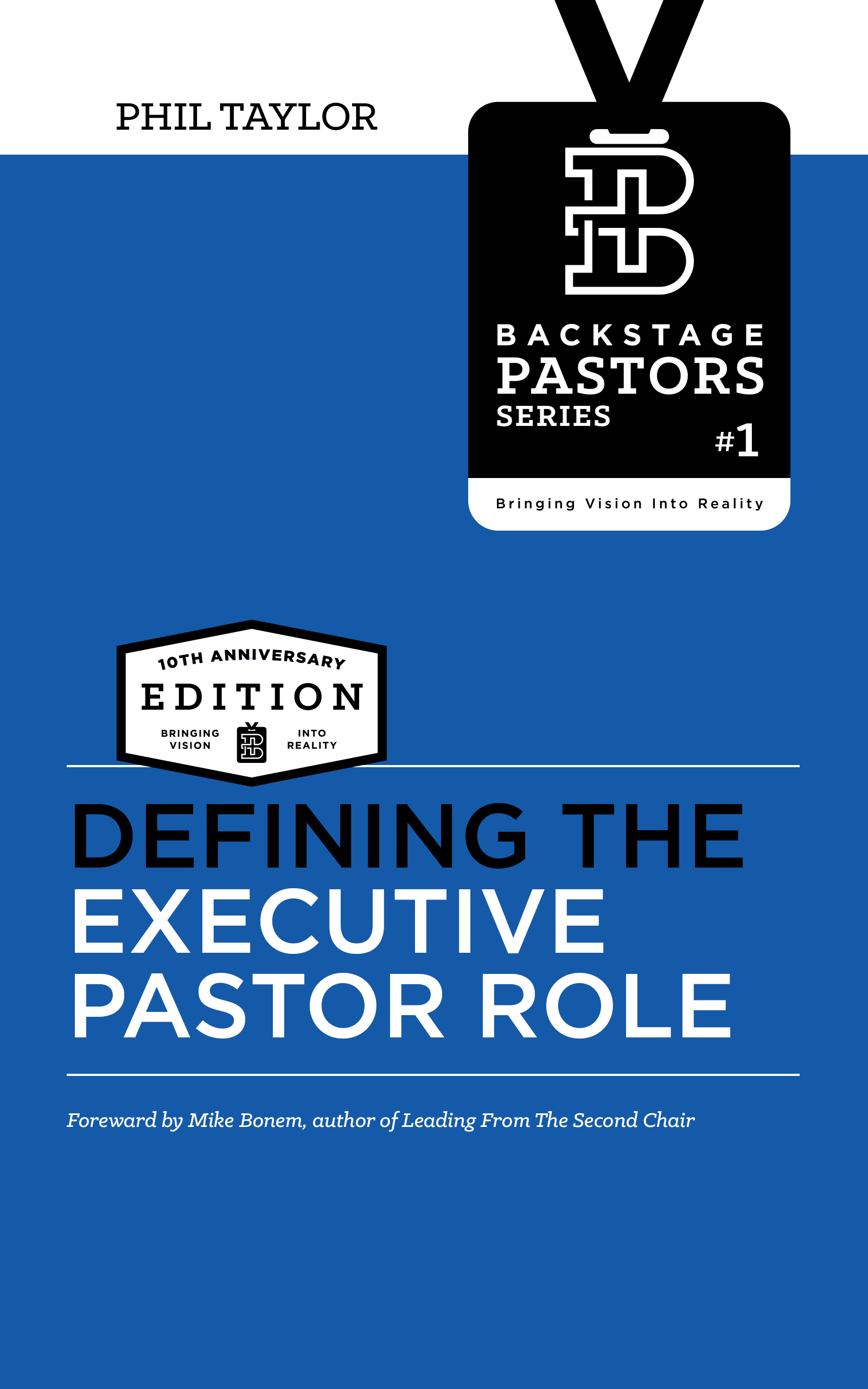
In this episode of the Backstage Pastors Podcast™️, hosts Phil and Tyler kick off the series by welcoming longtime executive pastor, author, and consultant Mike Bonem. The conversation centers on the origins and evolution of the executive pastor (XP) and second-chair leader role, drawing heavily from Mike’s seminal book Leading from the Second Chair and his more recent work Thriving in the Second Chair.
Mike shares the story behind writing one of the first books focused on second-chair leadership, reflects on how the XP role has changed over the past two decades, and offers practical wisdom for sustaining long-term effectiveness in backstage ministry. The discussion also explores challenges around change management in churches, delegation, metrics, and how second-chair leaders can find encouragement and visible impact even when their work often happens behind the scenes.
Resources Mentioned
- Unstuck Event: Church Building Masterclass with Phil Taylor
- Leading from the Second Chair by Mike Bonem
- Thriving in the Second Chair by Mike Bonem
- Leading Congregational Change by Mike Bonem
- In Pursuit of Great and Godly Leadership by Mike Bonem
From Our Partners
The Church Hub serves pastors, ministry leaders, and their spouses through equipping and training resources. Learn more at Thechurchhub.org
CHAPTERS
01:40 – Series Overview and Defining the Executive Pastor Role
03:17 – Announcement: Church Building Projects Masterclass
06:24 – Introducing Mike Bonem
08:38 – The Story Behind Leading from the Second Chair
12:38 – Why Thriving in the Second Chair Was Written
14:04 – Extending Your Shelf Life in Ministry
17:00 – Finding Encouragement in Backstage Ministry
24:50 – Why Change Is So Hard in Churches
33:09 – Preparing for the Executive Pastor Role
– –
Editing and Support by The Good Podcast Co.
BP_Episode 01_MikeBonem
[00:00:00] Phil: Hello and welcome to the Backstage Pastors podcast, helpful conversations for executive pastors and second chair leaders in the church and nonprofit world. I’m your host, Phil Taylor. With me today is my co-host, Tyler Drewitz. Tyler, it’s good to see you today.
[00:00:28] Tyler: Good to see you too. I am so excited for our first official episode.
[00:00:32] Phil: We’ve, uh, you know, we’ve, we’ve hopefully our listeners have had a chance to, uh, listen to the preview episode, uh, that came out last month. But, uh, as a recap, uh, Tyler and I are both bringing, um, kind of decades of, of executive pastor experience to the, so to speak. Uh, I spent 20 years as an xp, and now I, I basically work with XPS all over in various ways through my.
Full-time role at Plain Joe Studios, [00:01:00] uh, and through my own company at Backstage Pastors. And lastly through the Church Hub, which is, uh, also sponsoring this podcast.
[00:01:09] Tyler: Awesome. Yeah, and I’m the executive pastor and one of the original planters of Formation Church here in the Salt Lake City area. I also lead my XP church where a team, uh, steps in to help pastors sort out real operational and financial challenges.
That come with running a church. Uh, you know, we serve as a remote executive pastor to churches around the country. And really it’s one of my favorite things that I get to do.
[00:01:31] Phil: Well, Tyler, uh, for this, um, first uh, series or season, I’m not sure what is the best word to use there, but for the first, uh, uh, what do you think?
Series. Let’s go with series.
[00:01:40] Tyler: Yeah.
[00:01:41] Phil: Series. Go. Uh, series. There you go. Of the Backstage Pastors podcast, uh, is roughly following sort of the key figures and topics from my first book, defining the executive pastor role. And I wrote, uh, that book over 10 years ago now.
[00:01:56] Tyler: Whoa. Crazy. I didn’t realize
[00:01:57] Phil: It’s crazy that long, right?
It has been 10 [00:02:00] years. Yeah. Uh, and then what I did was, um, it’s actually more like 11 years now. ’cause what I did is at the 10 year mark, I, um, did a major update to it, added several chapters to it, uh, and then, you know, really kind of just updated all the existing chapters with another, you know, decade of experience.
Totally. And, uh, and then I re-released it and so it, it, in many ways it’s a, it’s a brand new book.
[00:02:23] Tyler: Oh yeah. I, I read it originally and. The redo and it did not Oh, thank you. Feel like double duty, so for sure.
[00:02:30] Phil: There you go. So yeah, it’s been out for a while now and it’s, it’s served a lot of pastors. It’s been really cool to see, uh, just how God has used it.
But again, for this kind of initial season, the idea is that we’ve got a lot of people that are mentioned in the book. A lot of concepts that are important in the book, and so we’re bringing on guests that tie into that in this first season.
[00:02:50] Tyler: Well, totally. And I think one of the really important figures in your book is Mike Bonem.
He wrote, leading From The Second Chair, which for the longest time [00:03:00] really until your book was written, was one of the only explicitly XP books that was even available to anyone. And so, um, of course he’s gonna be our very first guest on the podcast, which I’m. Super excited about, uh, but first I think you had a quick announcement about an upcoming event you wanted to invite our listeners to, right?
[00:03:17] Phil: Yeah. So, uh, Tyler, many of our listeners will be familiar with the Unstuck Group, or you might subscribe to the Unstuck Podcast. It’s a great podcast. Unstuck is, uh, like a church consulting firm. Specifically, they help churches get. You know, unstuck. It’s a great organization. They’re good friends of mine and they actually refer a lot of churches to me in my role at Plain Joe Studios, where one of the things we do is help churches with new.
Uh, building projects. So on, uh, March 5th, the Unstuck Group is partnering with Plain Joe Studios to bring you, uh, kind of like a crash course or masterclass. Um, really all things related [00:04:00] to church building projects. So, as my son would say, we’re doing a collab. Tyler. Oh, he’s always alright.
[00:04:06] Tyler: A
[00:04:06] Phil: collab. Huh?
It’s a collab. He’s always, always talking about that. Heard a few times. It’s big in like the gaming world, you know? Oh, gotcha. Like my son will be like, dad Fortnite is doing a collab with Formula One or with Marvel Uhhuh and so anyway. Gotcha. So Plain Joe Studios Unstuck group. We’re doing a collab Thursday, March 5th, online only.
You can take part in, uh, five hour Masterclass on. Church building projects. We’re gonna cover architecture, interior design, audio, visual lighting, graphics and theming signage, and things like building campaigns to, you know, raise the money bank loans for the money. You don’t raise all of it. My hope is that you’re gonna kinda walk away from this five hour event with a really good handle on.
All aspects of a church building project.
[00:04:56] Tyler: That sounds amazing. And I’m asking for myself [00:05:00] quite honestly, but for everyone else who’s listening as well, how do we get signed up?
[00:05:04] Phil: I had a feeling you would ask that Tyler and I don’t know the answer at the time for, okay.
[00:05:10] Tyler: Okay.
[00:05:10] Phil: We we’re recording this a little early and the link has not been created.
However, I will tell you that by the time this episode drops, by the time anybody is able to listen to it, there will be a link available and we will put it in the show notes. And you know you can also go to backstage pastors.org. You can go to unstuck group.com. Probably Plain Joe studios.com. It’ll be in a lot of places.
It won’t be hard to find. You can sign up. It’s totally free. Uh, March 5th, save the date. Sign up somewhere.
[00:05:39] Tyler: For sure. Well, and I mean, I’ll just say one of the things I’m so grateful for is that we had a Plain Joe studio come out and walk formation through what you guys call the blue sky phase. And it was honestly one of the most formative things that we’ve done.
I mean, of course it shaped the building and design side. But your team also really helped. In order to get [00:06:00] to that place, you really helped us get clear on who we are as a church, which has been such a huge gift to our church and our leadership team. All of it. And so, I mean, and of course the Blue Sky designs were phenomenal, but I think I just, I think the big takeaways for me were different than I anticipated and all very valuable.
[00:06:18] Phil: Well, we had a lot of fun working on that project with you guys.
[00:06:21] Tyler: What do you say? We head to that interview with Mike Bonum. Now
[00:06:24] Phil: let’s do it. Let’s get to Mike Bonum.
Our guest today is Mike Bonum and Mike consults with churches. He’s been an executive pastor. He’s been in the business world. He’s written a bunch of books. Mike, it’s good to have you on the show.
[00:06:40] Mike: Thanks, Phil. Thanks Tyler. I’m really glad to be here and glad to be part of this podcast.
[00:06:45] Phil: Well, Mike, you wrote, uh, leading from the second chair, which just got a new cover.
Uh, you wrote Thriving In the Second Chair. You wrote Leading Congregational Change. You wrote in Pursuit of Great and Godly leadership. [00:07:00] Perhaps the greatest writing accomplishment that you’ve had to date is the Forward that you wrote for my book, defining the executive Pastor role?
[00:07:08] Mike: Absolutely. I’m sure that was, uh, by far the greatest accomplishment, Phil.
[00:07:13] Phil: Uh, but seriously though, uh, I, you know, I personally, I have a very distinct memory of reading your book, leading from the second chair. I remember I was sitting in my office at my very first church. Right out of seminary, I was a, a lead pastor at a 7-year-old church plant that I had just taken over as the new lead pastor.
And, you know, things were going well, the church was growing, leaders were being developed, but I had this nagging sense that I, that I was in the wrong job. I, I didn’t like preaching every single week. I, I loved all the other stuff that pastors have to do. And I found your book. And I was like, oh my gosh, this is me.
I think I’m a second chair leader. And I don’t remember how you and I got connected, Mike, but, but we did, and we become, uh, friends over the last 15 years. And, and Mike, when, [00:08:00] when I wrote my book on the executive pastor role, I really sensed that I was. Standing on your shoulders and that you were the, uh, very first or the only person that I would’ve ever considered to write that forward for that book.
And so your writing has really had a profound impact on me and, and my ministry trajectory. And really it is the seminal book on, uh, on the executive pastor role. So thanks for writing it. And, uh, if you could just take us back to when that book was first published, leading from the second chair. Take us back to when that was first published, and tell us a little bit of, of that story.
What prompted the writing of it? What was kind of going on then?
[00:08:38] Mike: Yeah, sure. I’d be glad to Phil and, and first, uh, thanks so much for your kind words about the book. I, I remember you, um, told my wife as I was preparing for this podcast, she said, now who’s Phil? And I said, he’s actually one of the very first people that contacted me about leading from the second year after having read it.
So yeah, we have a history goes back a number of years and so [00:09:00] what you said.
Backstory on the book is that my co-author, Roger Patterson and I were serving together essentially splitting an executive pastor role between us at a church in Houston. And Roger knew that his calling ultimately was to be a senior pastor. I, that was not mine at all. And um, Roger called me one day after having done a week of intensive class at, at seminary where he was working on a doctorate.
And he said, Mike, we need to write a book together. And I was like. Okay. I mean, that, that’s all good and fine. Roger, Roger had a new idea for a book almost every week it seemed like. And uh, I said, so what’s it gonna be about and why do we need to write it together? And, and he said, you know, I was in the seminary bookstore just before I left to drive back home, and I was looking at the leadership section, which is what Roger did.
He, he was a student of leadership and he said, there’s no books out there for people like us. They’re all written [00:10:00] from this first chair perspective. Nobody’s talking about this executive pastor role. What if we wrote a book together on it? And I had the book that you mentioned a minute ago, leading Congregational Change had been out about five years at that point, four or five years.
And so I had the experience and the connections with the publisher and. And I thought it was a great idea. You know, as I thought about Roger’s comment, I thought, yeah, I can’t think of anything that’s out there, especially in the ministry space for people in secondary roles. Uh, and so that was, that was what the inspiration was.
[00:10:32] Tyler: Interesting. You know, I, I kind of think about, as I tell people that I’m an executive pastor right now, the number of times I get that real quizzical look like. You’re a what? And so you wrote the book a number of years ago now, so kind of walk us through what was the landscape of the executive pastor role way back then?
I mean, was it even called that? Did anyone know what it was? Help us understand what that was like.
[00:10:55] Mike: Yeah, so the book came out in 2005. Uh, like Phil said, it just had a [00:11:00] reprinting, it has has new cover on it. But at that time, yeah, there were definitely executive pastors and we had the opportunity to interview some of them, but they were all in mega churches.
So it was like, if your church average attendance is less than 2000, you don’t have an executive pastor. Um, so Greg Hawkins was at Willow Creek at the time. Uh, Dan Ryland, um, was at, I think was at 12 Stone then. Um, Warren Shu at the time, uh, was at, uh, one of the calvary churches out on the west coast, but they were all churches that were, you know, easily over 2000 and many times, over 5,000 worship attendants.
That’s, that’s about the only place that you found an executive pastor. Uh, and it was still a fairly new title. I, I actually remember having a conversation with my senior pastor. Uh, at one point he said, you know, we ought to think about an executive pastor title, because that was not my pastor, that was not my title.
And, uh, he said. Why would we do that? And won’t that just confuse everyone about, [00:12:00] about what your role is? So I totally get what you’re saying, Tyler. Yeah, it, it, it was certainly confusing then. Maybe a little bit less so now, but still a lot of people have those quizzical looks.
[00:12:10] Phil: Well, at least it’s become more common now.
And, and so people are a little more, uh. Understanding of, of what the role is. But you do have a new book out on the executive pastor role that you just wrote, um, recently called Thriving in the Second Chair. This is, uh, the subtitle here is 10 Practices for Robust Ministry When You’re Not in Charge. What were you kind of hoping to accomplish in, in writing that book?
What changed in 15 years? Tell, tell us a little bit about that.
[00:12:38] Mike: Sure. The, you know, Phil. I just, I continue to pitch myself even to this day about, uh, the way that God blessed leaving from the second chair and, and how many people have picked it up and, and been influenced by it. So you, you were one of the first, but a number of people contacted me at different times since [00:13:00] the book came out.
And, you know, they would ask questions, uh, you know, how do you deal with this? What about this situation? And, you know, over the course of a number of years, I started compiling this list of frequently asked questions, essentially things that I felt like we had not addressed in leading from the second chair.
One of the most significant was, uh, people saying. You wrote from a perspective of having a really healthy relationship with your senior pastor and a pretty, you know, pretty strong senior pastor, but my senior pastor is, you know, fill in the blank, scared of his own shadow, uh, you know, has no, no vision at all.
Uh, you know, the, the list would go on and on and just out of all those conversations and a lot of coaching that I did with executive pastors. I realized there was, there was another book to be written and so that, that’s why, um, I put together Thriving in the Second Chair to try to identify some of those gaps that we had not dealt with in leading from the second chair, and really [00:14:00] drill deeper on some specific practices that I thought needed to be addressed.
[00:14:04] Phil: That’s great. That’s great. There’s a chapter in there, uh, towards the end called Extend Your Shelf Life. I really appreciated that. Can you talk a little bit about that chapter and, and some of the questions that prompted it?
[00:14:17] Mike: Yeah. Well, you know, one of the things that would come up often, uh, as I would talk with executive pastors and coaching relationships or just informal uh, conversations is someone saying, well.
I think my time here is done. You know, they’ve, I’ve been here five years, I’ve been here seven years. I’m, I’m getting bored. I, you know, all the things that used to be fun to do, I’m not doing them anymore, except the
[00:14:40] Phil: pastors never get bored, do they? Mike,
[00:14:43] Mike: sometimes they get bored from doing the same thing.
Not that they’re bored, like they don’t have enough to do, but, but, uh,
[00:14:47] Phil: right,
[00:14:48] Mike: right, right. And, you know, it just, it occurred to me. That when someone is a really effective executive pastor, and I would say that was the case with many of the people I was talking [00:15:00] to, they’re not even asking the question, well, how could I rewrite my own job description?
What would I do to make my job more life giving? What would, what, what would I do to, uh, to get rid of some of the stuff that I just really don’t enjoy doing? Because frankly. When you’re a really valuable executive pastor, the last thing your senior pastor wants you to do is to turn you to resignation and say, I’m going somewhere else.
And you know, I mean, how often would a senior pastor, if you did that, how often would a senior pastor say, what would it have taken for you to stay? And if you say, well, I would’ve changed this, this, and this, and my job description, they’ve said, if you would’ve just told me before you accepted this other job, I would’ve done that in a heartbeat.
Right.
[00:15:39] Phil: Yeah. Why didn’t you talk to me about this three months ago? Yeah,
[00:15:42] Mike: yeah,
[00:15:43] Phil: yeah. I think that, you know, that that chapter, um, I is really helpful and not just for the executive pastor or second chair leader, but I think it’s something that, that, you know, for a lot of executive pastors, we, you know, we have, uh, a staff that we’re managing, whether it’s five [00:16:00] people or 50 people, or.
200 people. But you know, there’s, there’s, you’ve got a team that you’re managing and, and, and oftentimes that team feels that same thing. Uh, so I think it’s good for anybody in any role, and I think a lot of churches really don’t, they don’t think about the idea that you could take somebody’s role. You could take their job description, you could throw it in the trash and start fresh.
[00:16:22] Mike: I’ve had conversations with senior pastors and executive pastors, and they’ll say, well, so and so is somebody. We, we just c can’t afford to lose ’em. And I’ll say, okay, so what are you doing to make sure you don’t lose them? They’re in student ministry. Well, we, you know, they’re knocking outta the park and I think they have great potential.
Okay. So are you maybe given them more opportunities to preach? Are you having conversations with them about what else would. Get them excited because they probably will not stay in student ministry for the rest of their lives. So, you know, what, what are you doing to help ex, like you said, extend their shelf life?
Exactly.
[00:16:55] Tyler: Well, Mike, so we’ve got a question that we’re asking, uh, pretty much everyone this season [00:17:00] and we want to ask you as well. But, uh, you definitely know, as we kind of all know, there’s. Times and seasons when ministry can be incredibly hard, and especially when you’re leading from the second chair or backstage or whatever vernacular you wanna use, uh, there’s a lot of times where you don’t get the opportunity to see that kind of return or, or you don’t get to see the impact or you don’t get to see what you did.
You know, if you implement a new system or process, you don’t get to see how that. Led somebody through to accept Christ and be baptized and those types of things. But every great once in a while, there are these moments that you have that are like that kind of aha moment. Uh, God is so gracious to show you exactly how you made that impact and what you did.
And so I think it’s important that we remember and celebrate those. And so as you kind of think back over the career that you’ve had and the ministry that you’ve had, and specifically right now. Uh, in your investment in time, in consulting, uh, can you think of one or two examples of that that you might have where God really revealed to you the impact that you’ve had?[00:18:00]
[00:18:00] Mike: Yeah, I’ll, let me answer with two different, um, examples, Tyler. One more from when I was an executive pastor, uh, because I totally understand what you’re saying about, you know, you’re behind the scenes, right? And then maybe one from, from consulting, but. I tend to be more of an introvert, but I really do like being around people.
And one of the things that can happen in this executive pastor role is you can get locked in an office all day long, right? I mean, you or, or wherever. I mean you, you’re interacting with staff and then you and your computer sometimes, and I made a point to stay engaged with people in our church. So, you know, getting to know the newcomers and, and we were, we were a multi-campus church.
I was primarily, as far as my interaction with church members based on, uh, one of the two campuses. Uh, but I got to know all the, as much as I could, the newcomers to the church. And, you know, there’ve been, been more than one [00:19:00] person, uh, over the years who had subsequently said. You are the person who remembered our name.
You are the person who really helped us feel welcome here. You are the person who, when we came back the second Sunday, you know, asked how our kids were doing and that sort of thing. You know, that’s been really meaningful to me. Uh, and I think it’s, it’s a maybe a takeaway for others who would be listening this podcast, you who are in that kind of backstage role is.
Yeah, you, there’s parts of it that you can’t, you, you, you’re never going to be the senior pastor and necessarily front stage in the limelight, but that doesn’t mean that you have to be completely off stage all the time.
[00:19:37] Phil: When I was in my last church, I, I would often do that by, um, keeping Sunday lunch free.
And, and I would, I would go into church in the morning kind of, uh, really asking the spirit of God to. To guide me on who I was gonna grab lunch with that day, like a new family or maybe somebody that was struggling or something like that. And uh, and my whole family would join in. You know, we’d just go to a [00:20:00] restaurant nearby and just had some incredible shepherding opportunities and I definitely feel like that kept me grounded in the midst of, you know, budgets and buildings and staffing issues and all that kind of stuff.
Yeah.
[00:20:12] Tyler: Super important. But I think, I think to your point, Mike. As you are behind the scenes, you get to interact with different pieces of data that, that people know about. So I’ve gotten that, that comment as well, man, you remembered my name and it’s mainly because I saw it come through the database. I made sure they got plugged into the right workflow.
I reviewed their family and so as a result, uh, I just had a different level of interaction than maybe a quick Sunday. Hello. And to be able to like follow that up the following week and all of that. I think that’s. That’s really a, a brilliant kind of, uh, piece of advice for anybody listening to make sure that, uh, ’cause I’m more of an introvert as well.
Uh, I, I, on Sunday mornings, I don’t love, you know, networking in the lobby. That’s not my thing, but looking for those people who look a little lost or looking for those people who, uh, you know, come in and you can tell they’re trying to figure out what to [00:21:00] do. I feel like I sometimes am that am in that place.
And so it’s great to be able to connect with them and get them connected to different parts of the church. So that’s, that’s a huge, huge, great benefit for sure.
[00:21:10] Mike: I think the other thing that an executive pastor has to do, uh, that, that brings you a kind of an intrinsic or secondary reward, sense of reward, is you have to really value the contributions that the staff that you’re supervising.
Or making. And so, you know, if student ministry reports to you as an executive pastor and you’re giving great coaching and great advice to the leader of that student ministry, when the student ministry’s hitting it outta the park, you don’t need to take credit for it. But you do need to have that deep sense of satisfaction that I’ve done my job well when, when those other parts are working well.
[00:21:49] Phil: How about in your consulting world, Mike, what’s, what’s, uh, something that really kind of pops out as like, this is why I do this?
[00:21:56] Mike: You know, I, I split my time filled these days between consulting, which [00:22:00] I would define as working with an organization. So helping them with strategic planning or with like Sure.
How their organization is set up with churches and ministries. And, and the other half of my time is, is doing coaching one-on-one with leaders. Um, the thing that really came to mind as you asked the question is a pastor that I was, that I had a long-term coaching relationship with and their church was, um, had hit some bumps financially, and they were at a place where, um, you know, he wondered if they needed to lay off staff, you know, one or two staff people, you know, what, what they really needed to do.
And he was just way down with the anxiety of it all. And in one of our coaching calls, I said, you know, I can just, I can feel the anxiety dripping off of you in this, in this conversation. Who else are you sharing it with? And he said, nobody. I said, he, you have an elder board? He said, yeah. I said, did they have any idea how anxious you are about this?
He said, no. I said, well, [00:23:00] why wouldn’t you share this with them for two reasons. One is they may have different ideas, just practical solutions. But two, they need to be praying about this and praying for you in the midst of this season. It doesn’t have to all be on your shoulders. Yes, you’re the only senior pastor, but that doesn’t mean it’s all on you right now.
And, um, you know, the next conversation that we had, he said, you know. You were right and I talked to them and the financial problems didn’t immediately solve themselves, but the weight that I was feeling has really, you know, diminished considerably.
[00:23:31] Phil: That’s awesome. Tell us a little bit about, um, a little more about kind of how you’re working with churches and, and organizations.
Mike. Just give us a sense of what does that look like? What are the, the things you’re seeing there?
[00:23:43] Mike: This won’t be surprise to, to you all and probably to many of the people who will hear this podcast. There are. Lots of churches that struggle, uh, lots of churches that, uh, that are frankly, really inwardly focused.
And so anytime I can in, you know, when I’m wearing my consulting hat, [00:24:00] help a church to be a little bit more outward, externally oriented, a little bit bolder in its vision, I consider that to be a real win. But it’s hard. You know, one of the, the, the first book that I wrote, the one that you mentioned on Leading Change, um.
Change in churches is just really, really difficult for so many different reasons. Uh, and so, um, you know, one of the places that I end up spending my time is coaching pastors or coaching leaders in churches around, you know, all the messy dynamics that are related to change. Because, you know, as soon as you start making any kind of changes programmatically or organizationally.
You, you run into resistance. Um, and so just trying to help people work through that is one of the places that, that it’s challenging, but I really do. I enjoy helping people with that, helping pastors and leaders with that.
[00:24:50] Tyler: Do you have any insight as to why that change is so challenging for people? Why, um, do you feel like it’s just universal?
That in general? I think some people [00:25:00] just hate change, and I think that’s true. But it does seem like I, I’ve worked in other fields and it does seem like in the church world in particular, it is more challenging to change really anything at all, but make kind of a small change, a big change. And so any insight as to what leads to that.
[00:25:19] Mike: I could talk for an hour on that. Tyler and I have in different seminars, so you guys may have to cut me off, but, but I’ll give you at least a couple of the top level, uh, responses. Um, one is that we, you know, in business, well, let me, let me contrast church and business in a couple of different ways. In business, you have clear distinction between who’s a staff person who is, uh, an a stockholder, um, who is a customer.
They’re all kind of meshed together in a church. I mean, your biggest donor is married to the pianist, uh, and you know, and is [00:26:00] also a member. And so how do you think about, you know, it’s just, it’s messier, uh, and sure. In business, we have some metrics that we will look at, right? I mean, is it profitable or not?
Did we increase sales or not? Now we have metrics that we look at in the church, but there are a whole lot of things that are much harder to measure. And so if you say, we need to make some changes because we’re not reaching people in the community the way that we could or should. Well, what do you really mean by that?
You know, and, and whatever, whatever thing you want to talk about as to why we need to change, there’s gonna be some, some more subjective, less quantifiable things to that. I was just on a conference call with a group of executive pastors today, and the conversation was, what metrics are you using that are helping you to get beyond just those superficial ones?
Uh, so. Those are a couple of the reasons. Um,
[00:26:54] Tyler: sure.
[00:26:54] Mike: And then the last thing that I’ll say, uh, is that a [00:27:00] lot of pastors are, you know, really deeply people pleasers. And so at the end of the day, you know, I mean, when I’m coaching somebody around change, if they say, well, look, I’ve got, you know, 96% of the congregation behind me.
My response is politely, maybe not as blunt as I’m gonna say right now, but my response will tend to be, what are you waiting for? But the reality is that the, the people pleasers tend to say, I wanna get that last 4% on board.
[00:27:31] Phil: Sure.
[00:27:31] Mike: And you’re almost never gonna get that last few percent, whatever it may be on board if you’re talking about any kind of significant change in a church.
[00:27:39] Phil: Yeah. I think we’ve all, we’ve all felt that, haven’t we? So, um, you know, I think all three of us on this podcast, uh, do some type of coaching in different formats. Uh, we’ve all kind of mentioned that a little bit. Mike, what are some of the things that you find yourself saying again and again to executive [00:28:00] pastors in your coaching relationships?
Like, you just feel like you get the question, you pop in the nickel and you hit play ’cause you’ve said it a million times. What, what are the consistent ones you get?
[00:28:11] Mike: So I’ll, you know, I try as much as I can in my coaching to not give too much advice, but to really lead with questions so they can figure it out on their own.
But at the end of the day, the two, two things that immediately come to mind for me, uh, that if they don’t figure it out on their own, I’m gonna say it, Phil, uh, often is, uh, one, is to have the conversation, um, to, and you know. Sometimes it’s with a staff person who is not meeting expectations, but I’m particularly thinking about, have the conversation with the senior pastor.
Uh, it goes back maybe a little bit to what we talked about with extending your shelf life earlier. That can be any number of different topics is you know that well. You know, I don’t wanna have this hard conversation with my senior pastor, so what are the [00:29:00] options? You know, you sit there and you sulk. You sit there and you, and, and you’re confused.
You, you know, you’re not sure No. Have, have the conversation. So I say that a lot. The other, uh, is around delegation. One of the things that happens a ton with capable executive pastors is they keep getting more and more and more thrown on their plate. And so, great, you are good at this, so do this plus that.
Um, you know, it’s great that, uh, that you were supervising half the staff, supervise all the staff now, which on the one hand is a compliment, and it, it certainly feeds a superman complex for some people. But then when I’m talking to ’em and they’re saying, I’m burned out, you know, I’m not getting to spend any time with my family.
I, you know, I don’t have any quality downtime. You know, the question is what do you, you know, why can’t you delegate something? Uh, and so we talk a lot about being creative with how to hand off some different activities. Just because it [00:30:00] was on your job description two years ago doesn’t mean it still needs to be on your job description today.
[00:30:05] Tyler: That’s interesting. You know, one of the kind of really unique things about being in the XP role is that. Uh, in this role really more often than the other roles, you have to be worried about metrics and numbers and measurables and all of those types of things. As a matter of fact. Uh, I’m in a Facebook executive pastor group and someone posted a few weeks ago.
Do you ever get the feeling that XP stands for Excel Pastor instead of executive pastor? Which I, I’ve wondered that from time to time, but, uh, kind of, uh, what do you do to help, uh, executive pastors sort of live in the tension between the numbers and the measurables and all of that, and then the things in ministry that aren’t near as easily measured?
[00:30:42] Mike: Well, Tyler, a couple of things. One is I think you can get a lot more creative with measurement. Uh, so some of the things that we tend to think of as not being easily measured can be measured if we get more creative. There’s actually, in my book, thriving in the second Chair, there’s a chapter on measurement, [00:31:00] um, and how do we get beyond attendance and, you know, giving and, and baptisms.
So, you know. Like, uh, surveys of a congregation and you know, I know people on the one hand may get tired of surveys because, you know, anytime you travel you get a survey from a airline and a hotel and everything else, right? But I found that if you have a well-designed survey of the congregation and you don’t over survey them, you can get a decent response from it.
So if I wanna know if people are really, um, engaging in, um, in studying their Bible and praying. I would ask that I would consider asking that in an annual survey. Uh, now that’s not the typical thing that you measure, but that would give me an idea about that. Uh, I also think that leaders can give you some really valuable feedback, uh, that may be somewhat anecdotal, but when you, when you kind of roll it all together and synthesize it, it starts to tell you something.
So [00:32:00] if you asked every small group, if you had a meeting with all your small group leaders or a survey, either one, and said, you know. Tell me, you know, how much life change is happening in your small groups, and three quarters of them said, we have really great community, but we don’t have a lot of life change going on.
I would consider that to be a meaningful metric. It might not be the same level of quantification as saying, you know, 802 people were in worship on Sunday, but it’s still a meaningful metric.
[00:32:30] Tyler: That’s good. So what about when you think about someone who is. Beginning to sense the idea that maybe they’re called to be an executive pastor.
Maybe that’s why they’re listening to this podcast. They’ve heard of it and they’re kind of at that beginning place. Or maybe they’re someone younger who like, they feel like they came out ready to be an xp. That’s all they’ve ever wanted to be. Uh, what kind of advice would you give to someone as far as some of the pre-work they could do?
Maybe there? Uh, quite a ways away from ready. Maybe their church isn’t ready to hire them. Maybe they’ve got some [00:33:00] character stuff they’re working on to carry that pastor title, all of that. What are some things that they can do to make sure that they’re really ready to step into that role? Should God have that for them someday?
[00:33:09] Mike: Sure. And I’m, I wanna divide my answer up into two really distinct categories of people. Um, one, one pathway to the executive pastor that I see a lot is someone who has significant experience in business and. Which was part of my story. Um, you know, I had a, had a pretty good run in business and then stepped into this role that became an executive pastor role.
Um. That’s a very different scenario. And so let, let me talk about that one for just a second because my advice to that person is to spend is two things. One is spend enough time with the senior pastor to figure out if there’s really good chemistry there. And actually that’s true regardless of of any, anybody looking in executive pastor role, but also try to do as much you can to.
To understand that, that being an [00:34:00] executive pastor in the church is not at all like being a number two in business. Uh, and so just the, some of the messiness that changed that we talked about before, some of the difficulty of quantifying success or failure that we were talking about just a minute ago.
Um, some of the, uh, we’ve gotta treat staff with kid gloves a lot more than we did in the business world. All of those sorts of things. I’ve seen plenty of very capable business leaders. Move into executive pastor roles and then crash on the rocks because they didn’t really understand how different the church world was going to be.
And so if, if you’re an experienced business person thinking about making that shift, spend some time really trying to understand the culture of the church that you might be going into, and the differences between being in business and being in church. Now, if you’re that younger person who maybe is already in ministry and feeling that call, or maybe not in ministry either way, there’s just, there’s a lot of experience that you can start to [00:35:00] build pre-execution pastor role.
So have you ever supervised someone, you know, uh, if you’re already in a church environment, you know, tell your boss, whoever that is, executive pastor, senior pastor, I think this may be part of my future. Is there some way is part of my career development that I can supervise a couple of people, you know, sometime in the next year.
That’s incredibly valuable experience. Sit in on the budgeting process. If it’s not your direct responsibility, then understand how the numbers work and how budget gets put together. And you know, if it makes you wanna run outta the room with your hair on fire, when you see that’s done, then ask yourself the question, am I really cut out to be an executive pastor now?
I know some executive pastors really don’t deal with the finances and the numbers, but most do. Uh, but look for those kind of stepping stone experiences that would help, uh, that would give you a taste without actually having to step fully into the role.
[00:35:54] Tyler: Awesome. Thank you.
[00:35:55] Phil: So Mike, um, what are you, uh, what are you up to these days?
What’s, what’s some of new stuff [00:36:00] you’re working on that you’re able to talk about here?
[00:36:03] Mike: You know, I continue to have a pretty full plate of both consulting and coaching work that I’m doing. I have for a number of years, uh, run as the facilitator and kind of guide three different groups for executive pastors, all that are part of the.
Uh, United Methodist tribe. And so, uh, I continue to do that, uh, and, you know, really enjoy that work. You know, the coaching takes me at all sorts of different places in terms of ministries and settings and, and the like, one consulting project that I think I’m on the verge of starting, uh, probably by the time this podcast is released, I’ll be well into it.
Or, or, uh, I hope I’ll be well into it, is with. Um, ministry that works with at risk children in Africa, and we’re gonna, we’re gonna be looking at, at a new strategic plan for them. Uh, and I’m real excited about doing that.
[00:36:56] Phil: That’s great. I wanna thank you personally just for the investments [00:37:00] that you’ve made in me over the years and, and on behalf of the executive pastor community, I, I wanna thank you for creating some incredible tools in these books that you’ve written.
You, you truly. Have impacted a generation of pastors. You’ve, I feel like you’ve helped legitimize the second chair role. You’ve, you’ve raised it to a higher level. You’ve, you’ve made it, um, possible for a lot of people who, who probably would’ve sought the lead pastor role to feel like, no, I can be an executive pastor.
And that’s a, that’s a really valuable way, uh, for me to spend my time. And so you’re, you’re helping some really awesome people. Get into the right seat on the bus and, and honestly serving more effectively in the church. And that’s just through, you know, some, some words you put on paper and that is really good Kingdom, ROI.
So I want to thank you for that personally. And, and on behalf of executive pastors everywhere, Mike,
[00:37:58] Mike: I’ll, it’s really kind of you to say [00:38:00] that. I, I appreciate that.
[00:38:01] Phil: I, I mean it. Uh, how can people follow up with you? Um, how can they hire you if they need some consulting or coaching? Uh, where do you wanna send people?
[00:38:10] Mike: I don’t want anyone to hire me without talking to me. So what they need to do is, is, uh, look me up online. My website is Mike Bonem, BONE m.com. And you know, there’s some basic information, my bio and, and information on the types of consulting and coaching that I do there, and a contact form. And anybody who’s interested can just contact, you know, use the contact form to reach out to me and.
Uh, and set up just an initial conversation. I, I don’t charge anything for a, a email or a phone call just to get to know somebody and figure out whether there’s a, a good fit in terms of us being able to work together
[00:38:47] Phil: well. Uh, Mike’s books are on Amazon. You should read them and, and, and reread them as I have for years.
They strike me differently at different times in, in my ministry life. Uh, and they really are, uh, his two [00:39:00] books on the XP role really are required reading for executive pastors. Everybody I talk to, I say start, start there. Uh, hit him up for coaching, hit him up for, for some other work. He’s been doing, doing this for a long time.
He is. Got a lot of great experience. Uh, Mike, I want to thank you for being on the show today and, uh, thanks for your friendship.
[00:39:18] Mike: Well, Phil and, and Tyler both thank, thank you for inviting me on the show. Uh, really appreciate the opportunity and. Uh, we’ll look forward to hearing all your other guests. I’m sure it’s gonna be a great season on the backstage Pastors.
[00:39:31] Phil: We’ve got a good lineup, that’s for sure.
[00:39:36] Tyler: So Mike has inspired so many executive pastors and his wisdom really continues to impact so many churches.
[00:39:43] Phil: He’s had a huge impact on me personally. I, I remember I emailed him after I read, uh, the book, uh, gosh, so long ago. And, uh, it, he responded like relatively quickly just to my, to my questions. I wasn’t even an executive pastor at the time.
I was a lead pastor, [00:40:00] but I was, I was sensing that I was actually better equipped to be an executive pastor. And, uh, I emailed him, asked him some questions he wrote back, and really, we’ve been, we’ve been friends ever since. Uh, just a. Just a great, great man and, uh, he served a lot of people in the church and it was really just super important to me that he’d be the first interview on our, on our new show.
[00:40:22] Tyler: Well, that’s gonna wrap up our very first episode of the Backstage Pastors Podcast, and I think we’re off to a pretty good start.
[00:40:28] Phil: Think so.
[00:40:28] Tyler: So, next time together, uh, we’re actually, uh, we’ve got the church planning director of the Harbor Network on the show. And if memory serves me right, didn’t you two actually plan a church together?
[00:40:38] Phil: We did, we did. So after I, uh, left that role as a lead pastor, my first role as an executive pastor was with, uh, ed Marcel. We planted together in New York State, upstate New York a number of years ago. Ed’s a, a brilliant guy. Uh, so until next time, uh, listeners. If you’d like to connect with me about Executive Pastor coaching, you can check out [00:41:00] backstage pastors.org and email me, fill@backstagepastors.org.
If you’ve got any kind of building project master planning architecture, kids theming, really any kind of what we call spatial storytelling needs that you’re working on at your church or nonprofit. You could check out some of our past building projects@plainjoestudios.com and then you can shoot me an email fill@backstagepastors.org and we’ll get a call scheduled to talk about it.
[00:41:25] Tyler: Awesome. And if you ever wanna reach out to me, you can always get me at Tyler at my XP church. That’s MY XP Church, and should you need apparel, signage, or printing done right, check out ridgeline printing.com. A fellow pastor and I started this company about a year ago just to give churches a reliable place to get high quality products without the usual headaches or crazy costs.
You can find us@ridgelineprinting.com and to keep up with our podcast on social media. You can follow us at Backstage Pastors on Instagram and Facebook,
[00:41:55] Phil: and the Backstage Pastors Podcast is brought to you by the Church Hub. The church hub serves [00:42:00] pastors, ministry leaders and their spouses through equipping and training resources.
You can check ’em out@thechurchhub.org, and our podcast is produced by The Good Podcast company. Our theme music was written by Seth K. Find him on Instagram at Seth is elsewhere. See you on the next show, Tyler.
[00:42:19] Tyler: See you later, man.